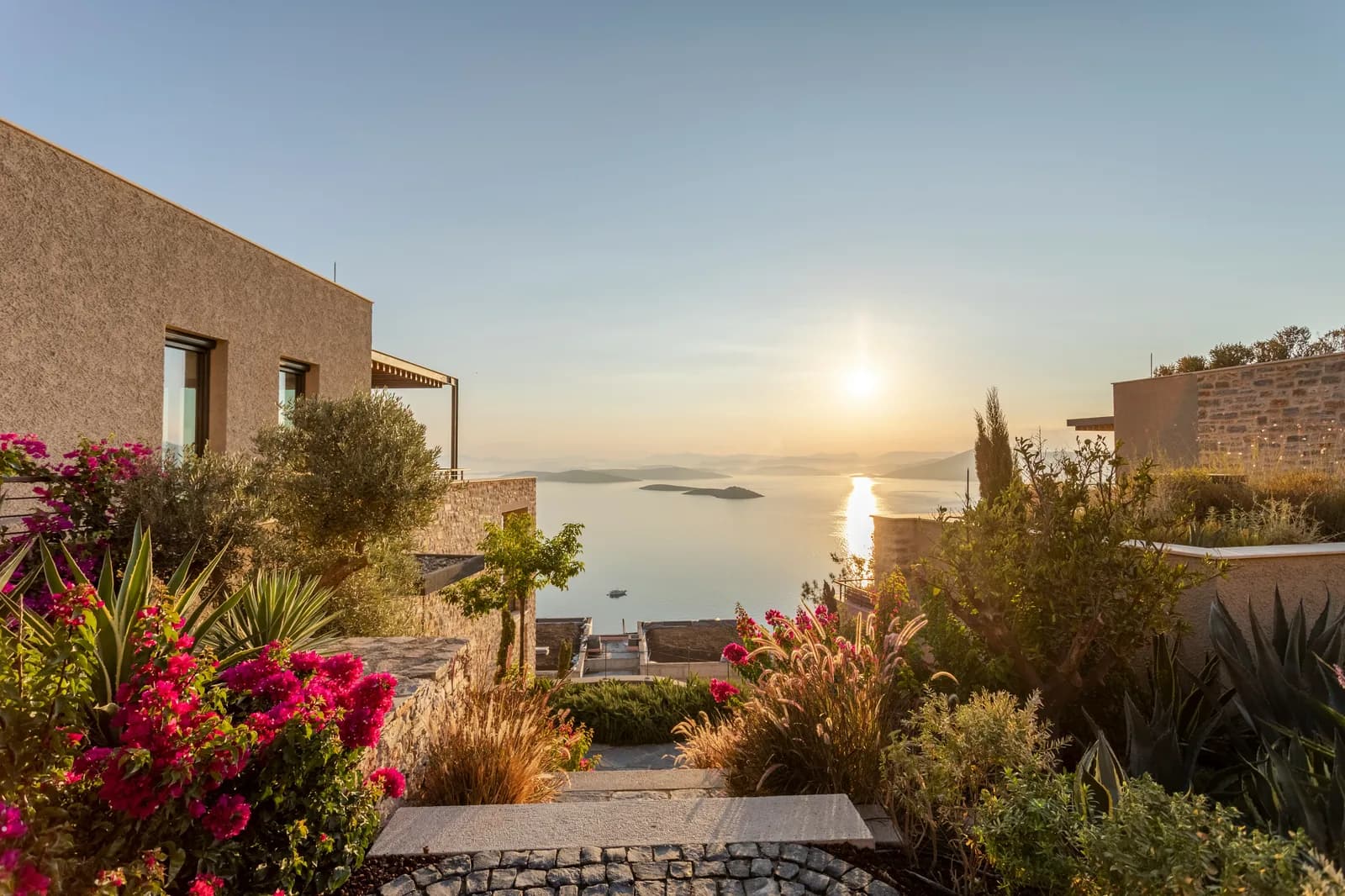
Turkey or Greece? The honest duel.
They share a sea, a season and half a food culture — then the bills diverge by 40%. Turkey wins price, hotel polish and ruins; Greece wins islands, ferries and EU friction-free travel. Scored round by round.
The Aegean doesn't care about the border: Bodrum and Kos sit twenty ferry-minutes apart under identical sun, Rhodes watches the Turkish coast from its beaches, and the meze on both shores share grandparents. The weather is a tie by design — same May–June and September–October sweet spots, same flagged midsummer heat, same warm autumn sea (the warmest in Europe is split between Cyprus and the Turkish coast). So the duel is decided on everything else, and everything else is genuinely lopsided in places.
Round one: the bill
Turkey, by 40% or more. The lira economy means the same calibre holiday — seafront four-star, long dinners, daily activities — runs at half to two-thirds of the Greek price. Antalya's five-star all-inclusives at €120–150 would cost €350+ in the Balearics and €250 in Crete; a full meze dinner for two with rakı clears €30 where the Greek equivalent with wine runs €55–70. Hammams, transfers, boat days — every line item lands lighter. If the budget is the binding constraint, this round ends the duel.
Round two: islands and water
Greece, decisively. Turkey's coast is magnificent, but Greece's archipelago is the product no one else has: two hundred islands, each a different holiday, stitched by the ferry network into hopping routes Turkey simply can't offer. The Greek island brand — whitewash, blue domes, harbour tavernas — is also, honestly, the thing many people are buying before any practical comparison begins. Turkey's answer (the Bodrum peninsula's ten villages, the gulet coast) is excellent and still not an archipelago.
Round three: the sights
Turkey, on density. The Greek classics are unanswerable — the Acropolis, Knossos, Delos — but coastal Turkey stacks antiquity deeper per holiday-mile: Aspendos' near-perfect theatre, whole gridded cities at Perge, mountain-top Termessos, Ephesus up the coast, the Bodrum castle's underwater-archaeology museum — most of it a day trip from a sunbed, much of it half-empty. Add the living-culture layer (hammams, bazaars, the çay economy) and Turkey offers more difference per day to a Northern European than one more taverna terrace does.
Round four: friction
Greece, structurally. EU membership does quiet work: no visa paperwork (Turkey requires a quick e-visa or exemption check depending on passport), eurozone pricing with no exchange arithmetic, EU roaming — your phone just works, where Turkish data needs an eSIM plan — and EU consumer protections on the booking stack. None of it is decisive; all of it compounds, especially for first-time independent travellers. Turkey's counter: its tourism hotels run newer and more polished at every price point, and service culture in the resort economy is a genuine notch warmer.
The verdict, by traveller
Budget-led, resort-based, ruins-curious → Turkey (Antalya for the riviera machine, Bodrum for the Aegean version with style). Island-romantic, ferry-flexible, brand-Greece → Greece (Naxos or Crete for substance, the decision tree for the rest). Can't choose → don't: fly into Bodrum or Rhodes and use the twenty-minute international ferry to do both shores in one trip — the border crossing that feels like a harbour hop is the Aegean's best-kept logistical secret.