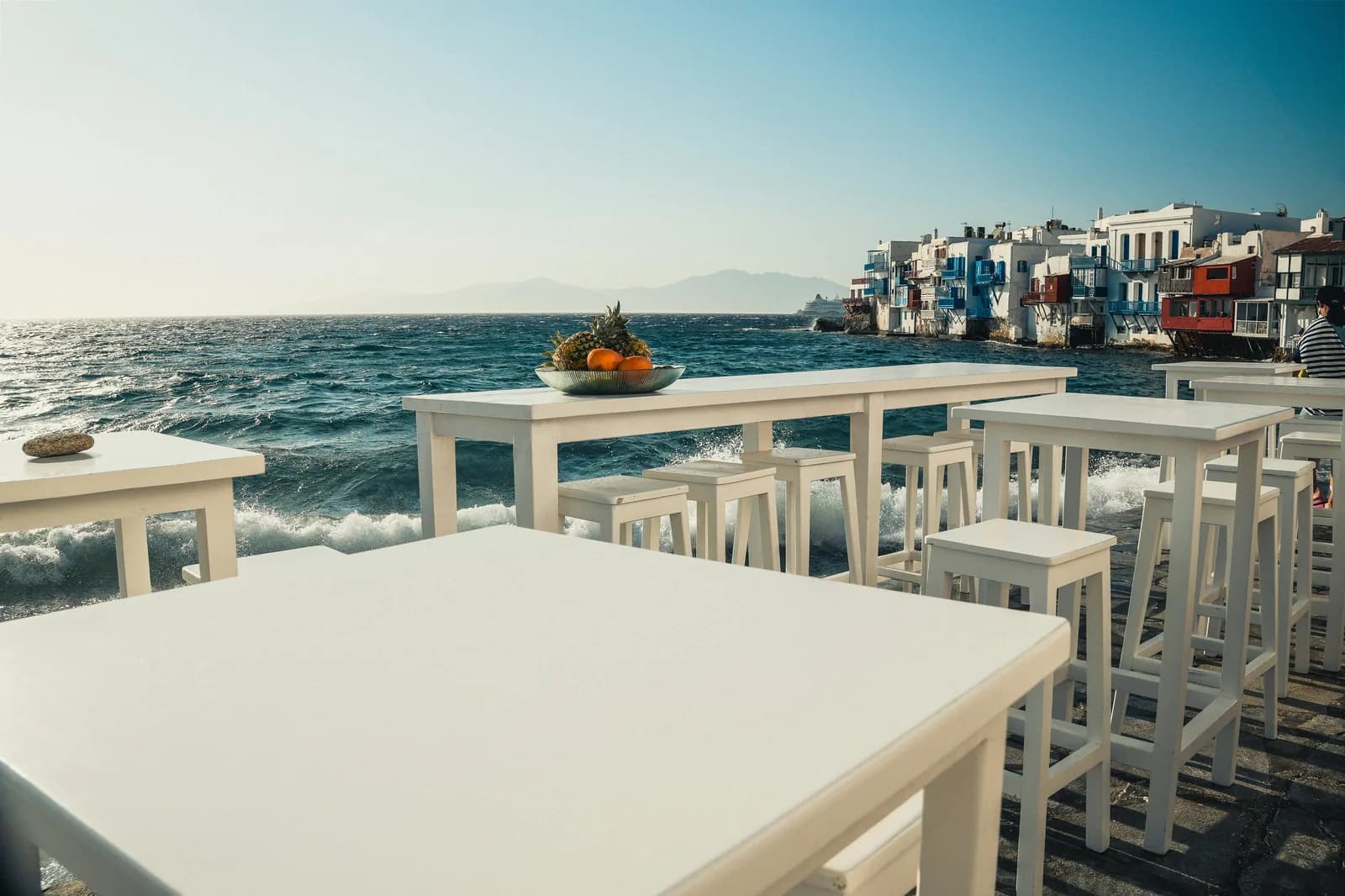
Mykonos.
Greece's most expensive island, priced honestly: what the scene actually costs, the beaches mapped by wallet, Delos — the real reason to come — and the September version that makes the whole thing rational.
Mykonos requires a different kind of honesty than most destinations. The island is beautiful in the standard Cycladic way — whitewash, windmills, blue sea — but so are a dozen cheaper neighbours, Naxos loudest among them. What Mykonos actually sells is a scene: the Mediterranean's most concentrated beach-club-and-celebrity economy, with prices engineered accordingly. A sunbed at the marquee beaches can cost more than a hotel room on Naxos. Knowing that going in — and knowing the two big exceptions, Delos and the shoulder season — is the difference between a great trip and an expensive sulk.
So this guide does the numbers out loud, then shows you where the island is still, quietly, Greece.
When to go
May, June, September and October, with more conviction here than anywhere else in the Cyclades — because on Mykonos the calendar moves prices as much as weather.
June: 27°C, sea 22–23°C, the season open but not yet feral. September is the rational person's Mykonos: 26–27°C, the sea at its 24–25°C peak, closing parties for those who want them, and nightly rates falling week by week from August's summit. May and October bracket the season at 22–25°C with the island returned to its 10,000 actual residents — some clubs shut, which is either the cost or the point.
July–August: the meltemi wind at full strength (it grounds ferries and sandblasts the north coast), 30–33°C, and the year's maximum prices on a base that's already Greece's highest. The study flags midsummer Aegean heat anyway. Unless the peak scene is specifically the product you're buying, these weeks are the worst exchange rate in the Mediterranean.
Getting there
Mykonos (JMK) takes direct seasonal flights from across Europe; year-round it's a 40-minute hop from Athens. The airport sits ten minutes from town — taxis are scarce and surge-prone (the island has famously few), so pre-book a transfer or use the hotel's. Ferries from Piraeus/Rafina take 2.5–5 hours and land at the New Port in Tourlos, a bus or €15 cab from town.
On-island: summer buses run the southern beach circuit cheaply and late; the Mykonos boat-bus (caïque from Platis Gialos or Ornos) hops the south coast beach to beach. A small rental car or ATV helps for the north and east — book early in season.
The pricing problem, stated plainly
Peak-season list prices, so nobody discovers them on arrival: marquee beach clubs charge €100–300+ for a pair of front-row sunbeds (Psarou's famous rows reach further); cocktails run €18–25; a taxi across the island, when you find one, €25–40; dinner at the scene restaurants lands €80–150 a head before wine ambition. A couple can burn €500 on an ordinary beach day without a bottle of anything iced.
The judo: the same island in late September charges half of that; the non-club beaches (below) cost a €5 sunbed or nothing; town bakeries and the surviving tavernas feed you properly for €15–25; and Delos — the best thing here — costs less than two cocktails.
The beaches, mapped by wallet
- Psarou — the flagship scene: yachts at anchor, the famous club, the famous bill. Go once with intent or not at all.
- Paradise / Super Paradise — the party pair: DJs from mid-afternoon, dancing on tables by sunset, entry economics above.
- Platis Gialos / Ornos — the family-civilised middle: full services, calmer pricing, the boat-bus hub.
- Agios Sostis — the north's barefoot exception: no sunbeds, no music, a hill path down, and Kiki's at the top (below). The island as it was.
- Fokos and Mersini — the far-north empties, dirt-road access, bring everything. When the meltemi blows, the south coast works; when it doesn't, the north is the secret.
The meltemi rule organises summer days: wind up = south coast; wind down = north.
Delos — the actual point
Thirty minutes by morning boat from the old port (around €25 return plus €12 entry) lies Delos, the sacred island of Apollo's birth — in antiquity the Aegean's holiest sanctuary and its richest free port, now the most complete archaeological island in Greece: the Terrace of the Lions, mosaic-floored merchant villas, a theatre district where 30,000 people once lived, all of it roofless and sun-bleached and astonishing. UNESCO-listed, uninhabited, no shade — take the first boat (09:00), water, a hat, and three hours. Standing in the agora with the Cyclades wheeling around you is the moment the whole trip files under worth it. Most visitors to Mykonos skip it, which tells you something about most visitors to Mykonos.
The town, used correctly
Chora is genuinely lovely and engineered to disorient — the matoyianni lanes were laid out to confuse pirate raids and now perform the same service on shoppers. Let it: the town works best as an evening drift. The windmills at golden hour, Little Venice's bar balconies hanging over the wave-splash (one overpriced cocktail here is legitimate theatre), the red-domed Paraportiani church doing its sculptural thing, then dinner in the back lanes. Pelican spotting — the town's mascot lineage, all named Petros — completes the bingo card.
Where to stay
Luxury — Belvedere, Chora
The town's establishment five-star: pool scene framed by whitewash, cocktail bar with form, the lanes two minutes downhill. Around €450–600/night in season — Mykonos luxury pricing, stated without flinching. Check rates on Booking →
Mid-range — Leto Hotel, Chora
On the harbour since 1953, garden-calm, sea-view balconies, walkable to everything — what "mid-range" means here. Around €250–320/night in season; €150s in late September. Check rates on Booking →
Budget-for-Mykonos — Carbonaki Hotel, Chora
Family-run rooms around a pool courtyard at the town's edge: plain, friendly, and at €140–190/night in season it is genuinely the island's budget tier — the phrase doing heavy lifting that Naxos, twenty minutes away by ferry, would do for €60. Check rates on Booking →
Eating without the scene tax
- Kiki's Tavern, Agios Sostis — the cult: no electricity, no bookings, a charcoal grill, a vine canopy and a queue that forms before it opens at 12:30. Pork chop, grilled feta, the famous salads — €25–35 and worth every minute of the wait it will absolutely involve.
- To Maereio, Chora — a 30-seat back-lane kitchen doing Mykonian home cooking (the local louza cured pork, meatballs) at human prices.
- Funky Kitchen, Chora — the modern-Greek counterpoint, open kitchen, €50–70, book.
- The bakeries' honey-and-cheese melopita and a gyros on Mitropoleos handle lunch for under €10 — the island never fully forgot how.
Practical notes
- Taxis: genuinely scarce — pre-arrange airport/port transfers and learn the bus times; it's the one piece of Mykonos logistics that punishes improvisation.
- Sea honesty: 22°C June, 24–25°C September; the meltemi makes July–August the windiest swim of your year on the wrong coast.
- Cash: cards rule, but Kiki's and the caïques prefer notes.
- The Naxos comparison: if you read this far with rising scepticism, that instinct has a destination — the Naxos guide is the same sea at a third of the bill.
The summary
Go in September. Sleep at the Leto or Carbonaki in town, take the 09:00 boat to Delos before anything else, split beach days between one deliberate scene splash (Psarou or Paradise, budgeted like a night out) and the barefoot north (Agios Sostis with the Kiki's queue), drift the Chora lanes each evening from windmills to back-lane dinner. Mykonos at full August throttle is a financial performance with a sea view; Mykonos in the shoulder, anchored by Delos, is — almost secretly — a great Greek island.