Bodrum.
Turkey's Aegean riviera: a crusader castle full of shipwrecks, one of the Seven Wonders reduced to a quiet garden, a peninsula of ten distinct moods — and sunset fish among half-sunken ruins at Gümüşlük.
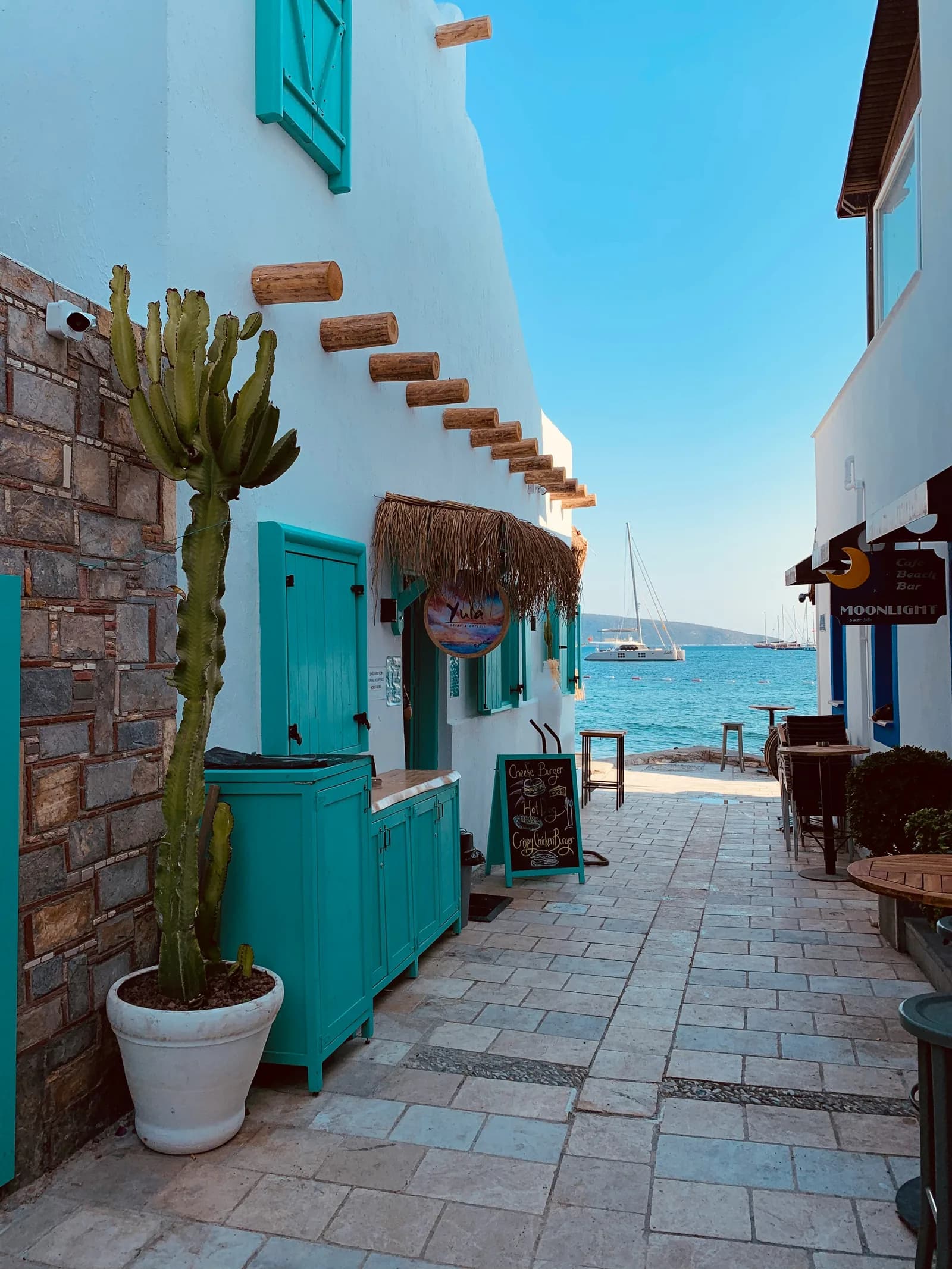
Bodrum is where Turkey keeps its Aegean self: drier, breezier and whiter than the humid Mediterranean coast around Antalya, a sugar-cube town by municipal decree (white walls, blue trim, nothing tall) curled around a castle harbour, on a peninsula whose villages run the full range from megayacht marina to a fishing hamlet where you eat over the drowned streets of an ancient city. Herodotus was born here when it was Halicarnassus; the Mausoleum that gave every mausoleum its name stood here; and the modern town wears all this lightly, between cocktails.
It's also the most Greek-adjacent of Turkish resorts — Kos is twenty minutes by ferry — with prices that undercut the islands opposite by half.
When to go
May, June, September and October, with the Aegean's gentler version of the Turkish summer.
May: 25–27°C, sea 19–20°C — spring-fresh, the peninsula green for its brief annual moment. June: 29–31°C, sea 22–23°C. September: 30°C easing through the month, the sea at its 24–25°C best, the scene still humming but bookable. October: 25°C, sea 22–23°C, the locals' favourite month and increasingly ours.
August is the flag: 34–36°C, the year's peak crowds (Istanbul decamps here wholesale), and peak pricing at the scene venues. It's a notch kinder than Antalya's furnace — the Aegean breeze is real — but the shoulder months are simply better at everything except people-watching.
Getting there
Milas–Bodrum (BJV) lies 36 km northeast: seasonal directs from across Europe, year-round via Istanbul. The Havaş shuttle meets flights (about €5–8 to town); taxis run €40–50. On the peninsula, the dolmuş minibus network is the circulatory system — frequent, sub-€2 hops between villages until late — so a rental car is optional unless your base is remote.
The Kos ferry (20 minutes) and the Greek-island day trip it enables is a passport-and-timetable exercise worth one morning's admin.
The peninsula taxonomy — pick your village
Bodrum is ten resorts sharing one name. The decoder:
- Bodrum town — the centre of gravity: castle, marina, bazaar, nightlife along Cumhuriyet's bar mile. Stay here for the full mix.
- Gümbet — the package-party annex next door; know what you're booking.
- Bitez — the family bay: tamarisks over sand, windsurf school, calm.
- Türkbükü — the scene: Istanbul money on white day-bed pontoons, the "Turkish Saint-Tropez" tag earned every July. Macakizi (below) is its flagship.
- Yalıkavak — the marina statement: superyachts, designer retail, polished promenades.
- Gümüşlük — the soul: a protected fishing village built beside (and partly over) ancient Myndos, where development froze and the sunset fish dinner became a rite (below).
- Turgutreis — the workaday west: long beach, Saturday market, real-town prices.
The castle and the drowned bronze age
The Castle of St Peter — the Knights Hospitaller again, building with stones quarried from the collapsed Mausoleum — commands the twin harbours and now houses the Museum of Underwater Archaeology, which is the single best reason to be indoors on this coast: the Uluburun shipwreck, a 3,300-year-old cargo of copper ingots, Canaanite jars, hippo ivory and a gold scarab of Nefertiti, raised intact from 50 metres and displayed hull and all. Allow a half-day for castle plus museum (around €15); the rampart views over the white town do the rest.
The Mausoleum of Halicarnassus itself, two streets back, asks for honest expectations: one of the Seven Wonders survives as foundations, column drums and a thoughtful little museum in a quiet garden — the superstructure is in the castle's walls and the British Museum. Fifteen contemplative minutes, correctly priced near-free. The restored ancient theatre on the ridge above town, with the harbour spread below, completes the Halicarnassus circuit.
The gulet question, answered
The wooden two-masted gulet was born in Bodrum's boatyards, and the "Blue Cruise" — lazing along the Gökova or Hisarönü gulfs, swimming off the stern in coves no road reaches — remains the area's great invention. The honest tiering: day-trip gulets from the harbour (€30–50 with lunch, swim stops at Orak island or the Aquarium cove) deliver a real taste and a crowded deck; a cabin charter (3–4 nights, €350–600 per person full board, shoulder season) is the genuine article and one of the Mediterranean's best-value floating holidays; a private charter scales with ambition. Book cabin charters weeks ahead for June and September. If you do one splurge here, this is the one.
Where to stay
Luxury — Macakizi, Türkbükü
The scene's definitive hotel: terraced gardens to a teak waterfront, a kitchen with genuine reputation, and the summer's most assured crowd. Around €450–600/night in season. Check rates on Booking →
Mid-range — El Vino Hotel, Bodrum town
A hillside boutique above the town: vine-shaded terraces, two pools, harbour view from breakfast, ten minutes' walk down to the castle. Around €120–160/night. Check rates on Booking →
Budget — Su Hotel, Bodrum town
Garden courtyard, honest rooms, a pool under the bougainvillea, family-run warmth in a back lane near the marina. Around €70–100/night. Check rates on Booking →
The Gümüşlük evening — do not skip
Twenty-five minutes by dolmuş from town, Gümüşlük is what the whole coast looked like before the marinas: a strip of fish restaurants with tables at the water's literal edge, Rabbit Island closing the bay (you can wade to it across the sunken breakwater of ancient Myndos, knee-deep over 2,400-year-old stones), and a sunset that the entire peninsula attends. Mimoza is the storied table — book the front row — with neighbours nearly as good; order the catch by weight, the meze parade, a bottle of local white, and surrender the evening (€30–50 a head). Afterwards: loquat-grove lanes, a mandalina (the local mandarin) gelato, the dolmuş home under stars.
What to eat
Bodrum's signature is çökertme kebabı — shaved veal over matchstick fried potatoes and garlic yoghurt — plus the Aegean meze canon: samphire (deniz börülcesi) in lemon and oil, stuffed zucchini flowers, octopus from the grill. The mandarin is the peninsula's fruit-crest: cold pressed at stands, candied in desserts, scenting whole villages in autumn. In town, Orfoz sets the seafood high bar (a procession of inventive courses; book; €50–70); the bazaar's pide ovens and the Tuesday/Friday markets hold the budget end with honour.
Practical notes
- Getting around: dolmuş for everything; taxis surge at 02:00 on the bar mile; a car only if you're basing remote or quarry-hunting beaches.
- Sea honesty: Aegean-clear and a touch cooler than the Turkish Med — 22–25°C through the core season. Most village "beaches" are platform-and-pebble; Bitez and Turgutreis hold the proper sand.
- Kos day: 20-minute ferry, EU passport queue, lunch in another country; check return times in shoulder season.
- Money: lira, cards everywhere, market cash. The euro-anchored scene venues (Türkbükü, Yalıkavak) price like the scene they serve.
The summary
Fly BJV, base at El Vino or Su in town (or commit to Macakizi and the scene). One castle-and-museum half-day with the Mausoleum's quiet garden after; one full gulet day — or the cabin-charter splurge; one peninsula loop by dolmuş ending at Gümüşlük for the Mimoza sunset; one lazy Bitez or Turgutreis beach day with market shopping. June or September–October. Bodrum is the rare resort coast with a genuinely great museum, a genuinely great boat tradition, and a fishing village finale the photographs undersell.