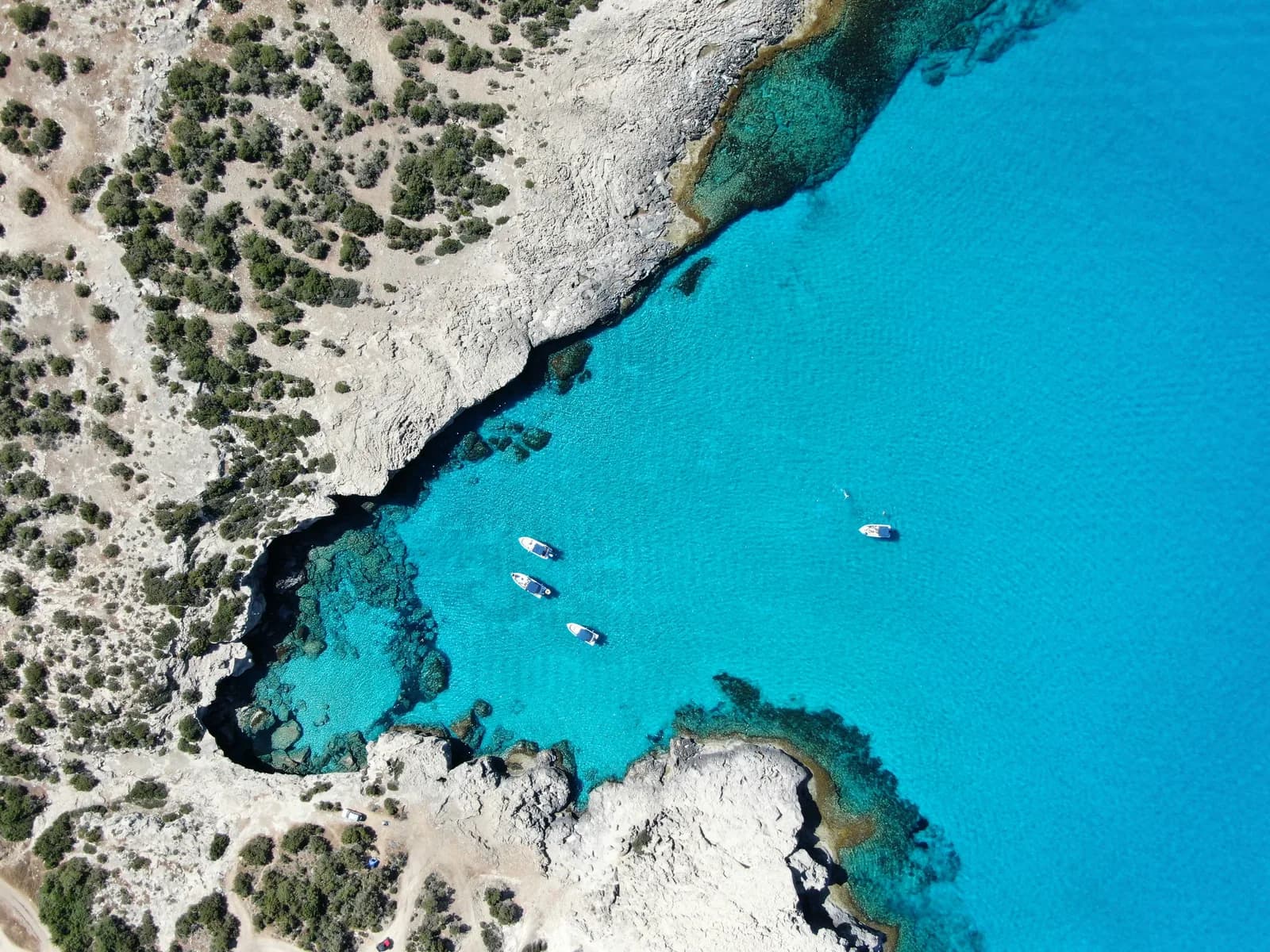
Where is the warmest sea in Europe?
Start with Cyprus and southern Turkey for a late-summer swimming holiday. In winter, look at the Canaries. The useful answer changes with your travel dates.
Cyprus and Turkey's southern coast are sensible places to start a warm-water summer shortlist. That is a travel recommendation, not a verified league table of every European beach. Cyprus's official climate guide gives about 27°C offshore in August. An older Turkish meteorological report puts Antalya's historical August mean at 26.9°C.
For winter, compare the Canaries instead. The sea there follows a different seasonal pattern, as the table below shows. It is still cooler than a Mediterranean summer swim.
A note on geography: this guide covers European holiday choices and nearby alternatives. The Canaries and Madeira belong to Spain and Portugal but lie in the Atlantic off Africa; Antalya's coast is in Asian Turkey. We are not ranking every coastline in geographical Europe or every European overseas territory.
July to September: Cyprus, Antalya or the Balearics?
If warmer water is the deciding factor, put Paphos and Antalya on the list. Then compare places you actually want to spend a week. An extra degree is not much use if the beach access, resort or summer heat makes the rest of the holiday wrong for you.
Mallorca is worth comparing too. AEMET's offshore point west of the Balearics has an approximate August median of 26°C. The Cyprus and Antalya figures use different statistics and location types, so we would not choose between these holidays on a decimal-point difference.
The Antalya figures also need a date label: the report was published in 2004, and its table summarises 33 observation years without specifying their exact endpoints. We use it as historical context, not a forecast or a modern normal. The Cyprus guidance does not identify its reference years either.
June versus September: compare the month, not just the destination
At the Balearic point, September's historical median is higher than June's. At the Canary point, the warmest medians occur later in the year. These two examples explain why your answer changes when you move the trip by a few months.
| Month | West of the Balearics | South of the western Canaries |
|---|---|---|
| June | ≈22°C | ≈22°C |
| July | ≈25°C | ≈22°C |
| August | ≈26°C | ≈23°C |
| September | ≈24°C | ≈24°C |
| October | ≈22°C | ≈24°C |
| November | ≈18°C | ≈23°C |
Use the full Mediterranean month-by-month reference for the complete year. If you are considering May or early June, read the spring swimming guide before treating a hot afternoon as evidence of warm water.
October and November: the shortlist gets more specific
Cyprus's official guidance describes open water above 22°C through November. That makes it worth investigating for a later trip, without promising the same temperature at every beach. AEMET's Canary example also retains substantial autumn warmth; the Balearic example cools sooner.
For an autumn swim-first holiday, compare Paphos with Tenerife South, then check the local water outlook. Our destination pages supply weather forecasts, not live sea temperatures. They cannot settle that comparison on their own.
December to March: look at the Canaries, with realistic expectations
The AEMET point south of the western Canaries has approximate monthly medians of 19–21°C across December–March. Those values are warmer than the selected western Mediterranean points, but they do not prove that every Canary beach is the warmest place available.
Would you enjoy water at that temperature, or were you picturing a heated pool? It is a useful question to answer before booking. The winter swimming guide compares the Atlantic options and a clearly labelled alternative outside Europe.
Warmer water does not guarantee a better swim
Shelter, waves and a safe way in and out can matter more than a small temperature difference. There is no universal “comfortable” temperature and no safe swimming duration you can calculate from this table.
Nor should a record-hot patch of sea become a selling point. Copernicus documents the effects of marine heatwaves; a local maximum, a basin average and a monthly climate statistic answer different questions.
Once you have a coast and month, compare hotels with easy access to the kind of beach you want. Confirm any pool heating that your plan depends on.