Cheap winter sun, ranked by warmth per euro.
The winter-sun bill is mostly calendar and category, not destination: Egypt's €70 all-inclusives, Djerba's forgotten prices, Marrakech riads, the Canaries booked right — and the two rules that halve any of them.
Winter sun has a reputation as the expensive indulgence, and it's half-deserved: the Caribbean and the Maldives in January cost what paradise costs. But the budget end of the market is genuinely strong — stronger per euro than summer's, because winter inventory chases fewer travellers — if you know which destinations run cheap by structure rather than by discount, and which two calendar rules move more money than any destination choice.
The calendar rules first, because they apply everywhere: avoid the three premium islands of time — 20 December–3 January, February half-term week, and Easter — when identical weather costs 50–100% more (the half-term piece prices this honestly); and mid-January to early February is the cheapest warm fortnight of the entire year, the post-holiday demand crater where airlines and hotels quietly capitulate.
The value kings
The Egyptian Red Sea is the budget benchmark nobody beats: Hurghada's all-inclusives run €60–100 per night for two outside the premium weeks — with 22°C days, the only genuinely warm short-haul sea (21–22°C), and reef snorkelling included in the price of breakfast. The AI format, which we argue against elsewhere, is honestly the right buy here: there's little independent dining scene to forgo, and the wristband price undercuts self-catering Europe. Sharm runs a notch dearer for better reefs.
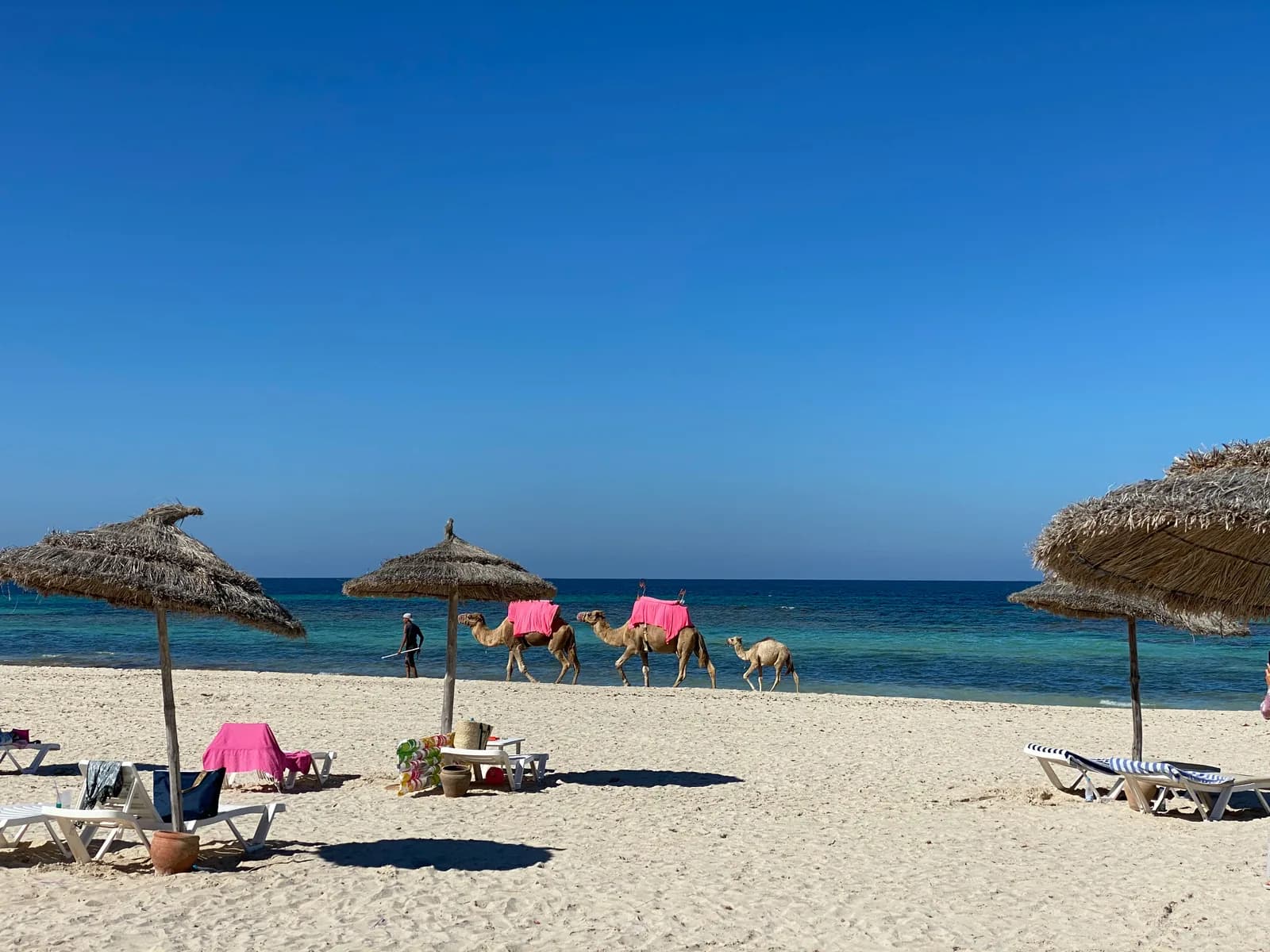
Djerba is the Mediterranean's forgotten bill: Tunisian four-star thalasso resorts at €60–90, 16–18°C winter days (walking-and-souk weather, not swimming), and a cultural depth — the street-art village, the synagogue, the fish-auction lunch — that the price tag hides. The honest frame: it's the cheapest mild winter, not the cheapest warm one.
Marrakech and Agadir split the Moroccan ticket: riad doubles from €50–80 and €15 dinners in Marrakech's 18–20°C January sunshine; Agadir adds the beach at 20–22°C with hotel rates the Canaries stopped offering a decade ago. The 3.5-hour flights are routinely the winter's cheapest seats.
The Canaries, booked right. Sticker prices look mid-market, but the structure helps: ferocious flight competition (four islands of routes), a deep self-catering apartment economy (the budget hack the package brochures skip), and January's crater pricing. A late-January Fuerteventura apartment week with low-cost flights regularly lands under €350 a head — for Europe's most reliable winter weather.
The false economies
Winter Antalya and mainland Spain look temptingly cheap because they're genuinely off-season — 14–17°C with real rain risk; fine city breaks (Málaga at 18°C is January's best urban trip), not sun holidays; know which you're buying. Ultra-cheap long-haul packages (€600 Caribbean AI fortnights) cluster in hurricane-and-sargassum season — the discount is risk, priced. The €25-a-night Canaries apartment in the wrong barrio costs its savings back in taxis; location-checking is the budget traveller's actual skill.
The one-line rankings
Warmest per euro: Hurghada. Cheapest mild week anywhere: Djerba. Best budget city-sun: Marrakech. Best budget beach with EU practicalities: Fuerteventura in late January. Best upgrade-per-extra-euro: Sharm's reefs. All of them at their cheapest in the exact fortnight — mid-January — when the northern winter bites hardest, which is either irony or design, and either way is the booking.