February half-term: what the premium actually buys.
The winter school break is the most expensive sun week of the year, and pretending otherwise helps nobody. What the money buys at four flight-times: Canaries carnival, Red Sea reefs, Dubai's reliable 25 — and the long-haul threshold.
February's school break — vinterferie in weeks 8–9, half-term in mid-February for the British — is the single most expensive sun-travel week of the European year, and any guide that doesn't open with that fact is selling something. The school calendars of half a continent compress into the same fortnight, mid-winter demand peaks, and the February guide's blunt line holds: the calendar moves prices more than the climate does. The same Canaries week costs a third more than the weeks either side.
You can't dodge the premium with school-age children; you can only point it at the right target. So here's what the money actually buys, ranked by what families need in February: warmth per flight-hour, and things for children to do beyond the pool.
4–5 hours: the Canaries, with a carnival attached
The Canaries at half-term run their standard honest winter product — 21–22°C days, sea at 19°C, sunshine the European mainland can't match — plus February's bonus: carnival season. Gran Canaria's Las Palmas carnival is among the world's largest, Tenerife's Santa Cruz answers it, and the costume-and-parade spectacle lands squarely in the half-term window most years. For children, that's the differentiator no resort kids' club matches. The honest line from the winter guides stands: pleasant, not hot; pool-with-heating weather more than sea-swimming weather.
5–6 hours: warm water, actual swimming
If the children judge a holiday by time spent in the water, the Red Sea wins February outright: Hurghada and Sharm el-Sheikh hold a 21–22°C sea under 22–24°C days, plus the reef — a snorkel mask turns every swim into an aquarium visit, which for a seven-year-old beats any waterslide ever built. All-inclusive logistics suit the age bracket, and February's underwater visibility is the year's best. Evenings want a hoodie; the February guide covers the rest.
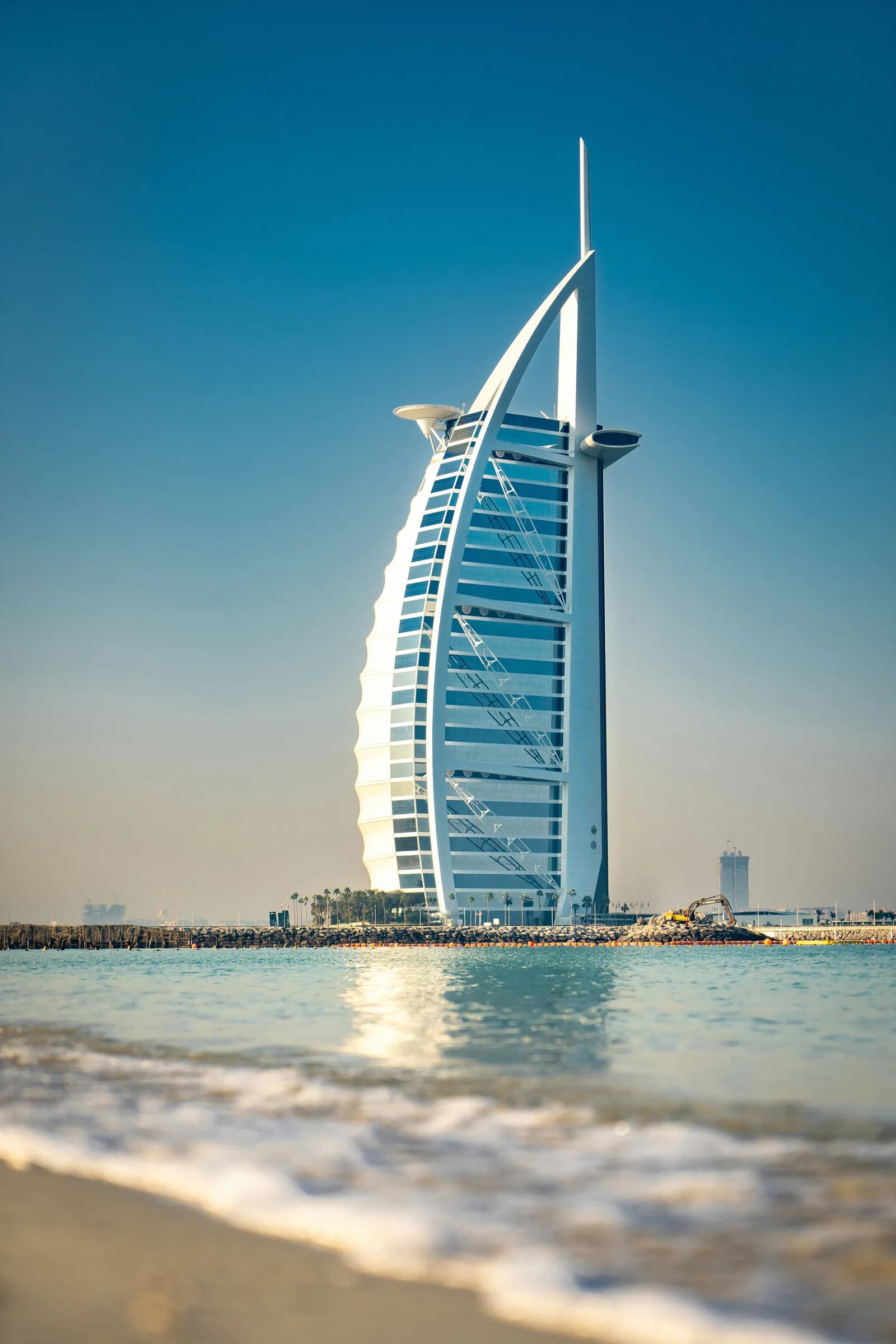
Dubai buys certainty: 25°C, statistically zero rain, the world's most engineered family-entertainment stack (waterparks run heated year-round), and flight times that work with a school-week frame. It costs like Dubai. It delivers like Dubai.
9+ hours: when long-haul starts making sense
The long-haul threshold is a maths question: 9–11 hours of flying for a single week strains everyone, but vinterferie families who can stretch to nine or ten days unlock February's genuinely hot tier — Thailand at its 32°C dry-season peak (Krabi's gentler bays suit younger children), the Maldives in its driest month, the Caribbean in prime trade-wind season. The rule of thumb we'd apply: under eight nights, stay within six hours; at nine-plus nights, the long-haul premium starts earning itself back in actual summer.
The one cheap trick left
Half-term pricing punishes the exact destinations everyone defaults to. The contrarian play: Marrakech (3.5 hours, 20–22°C February days, souks and camels and the Atlas — children remember it for years) and Agadir (the beach version, 21°C) price gentler than the Canaries in the same week because the school-holiday flood mostly passes Morocco by. Not swimming weather either — but as a different February week with sun on it, it's the value pick standing.