Winter sea swimming in Europe: where to look.
The Canaries offer warmer winter water than our western Mediterranean examples. Madeira is cooler. Neither promises a tropical swim, and the month still matters.
For a winter holiday that includes sea swimming, start by comparing the Canary Islands, then Madeira. Both are Atlantic island groups belonging to European countries, not destinations on Europe's mainland. Whether the water is warm enough for your holiday is a separate question from whether people swim there.
If your idea of swimming is lingering in warm water without thinking about the cold, a confirmed heated pool may be a better fit. Do not let the phrase “winter sun” make that decision for you.
Sea temperatures in December, January, February and March
AEMET's marine climate atlas gives a useful comparison on a common 1991–2020 basis. These are approximate medians from named offshore points, not measurements at resort beaches.
| Month | South of the western Canaries | South of Madeira | West of the Balearics |
|---|---|---|---|
| December | ≈21°C | ≈20°C | ≈15°C |
| January | ≈20°C | ≈19°C | ≈14°C |
| February | ≈19°C | ≈18°C | ≈13°C |
| March | ≈19°C | ≈18°C | ≈14°C |
December is warmer than February at all three points. Booking “winter” without checking the month loses information before you have even picked an island.
Canary Islands: a possible swim, not summer water
The point south of the western Canaries has historical winter medians around 19–21°C. It should not be used to give every beach on Tenerife, Gran Canaria and Lanzarote an identical forecast. It does support comparing the islands when warmer winter water is a priority.
Use Tenerife South or Gran Canaria as a starting point for accommodation and beach access. Close to your trip, check AEMET's beach forecasts, local warnings and the conditions at the beach itself.
Some travellers will enjoy a swim; others will find that water too cool. There is no responsible way to turn 19°C into “twenty minutes is fine for an ordinary adult”. Experience, equipment, health and conditions all affect the decision.
Madeira: check both temperature and access
The Madeira tourism board's FAQ describes winter seawater around 18°C. That broadly agrees with the cooler end of the offshore pattern above. It does not support promising 20–22°C throughout winter.
For a Funchal-based trip, use IPMA's local marine forecast to check water temperature, waves and wind. A lido or a natural pool is not automatically open or suitable just because the air is mild. Confirm the facility's current opening and any closures.
Madeira belongs on the shortlist if you also want the island itself. If warm water is the entire brief, do not choose it on the strength of a sunny photograph.
The winter Mediterranean: cold-water swimming is a different holiday
Winter swimming happens around the Mediterranean, but it asks for different expectations and preparation from a summer beach holiday.
The month-by-month reference shows the western examples. Further east, Cyprus's official guidance gives open-sea averages around 16–17°C in January–March. That is general seasonal guidance without a stated reference period, not a reading from your hotel beach.
Book a Mediterranean winter trip for the places you want to visit, with swimming optional unless you are deliberately planning and equipped for cold-water swimming.
If you are willing to leave Europe: the Red Sea
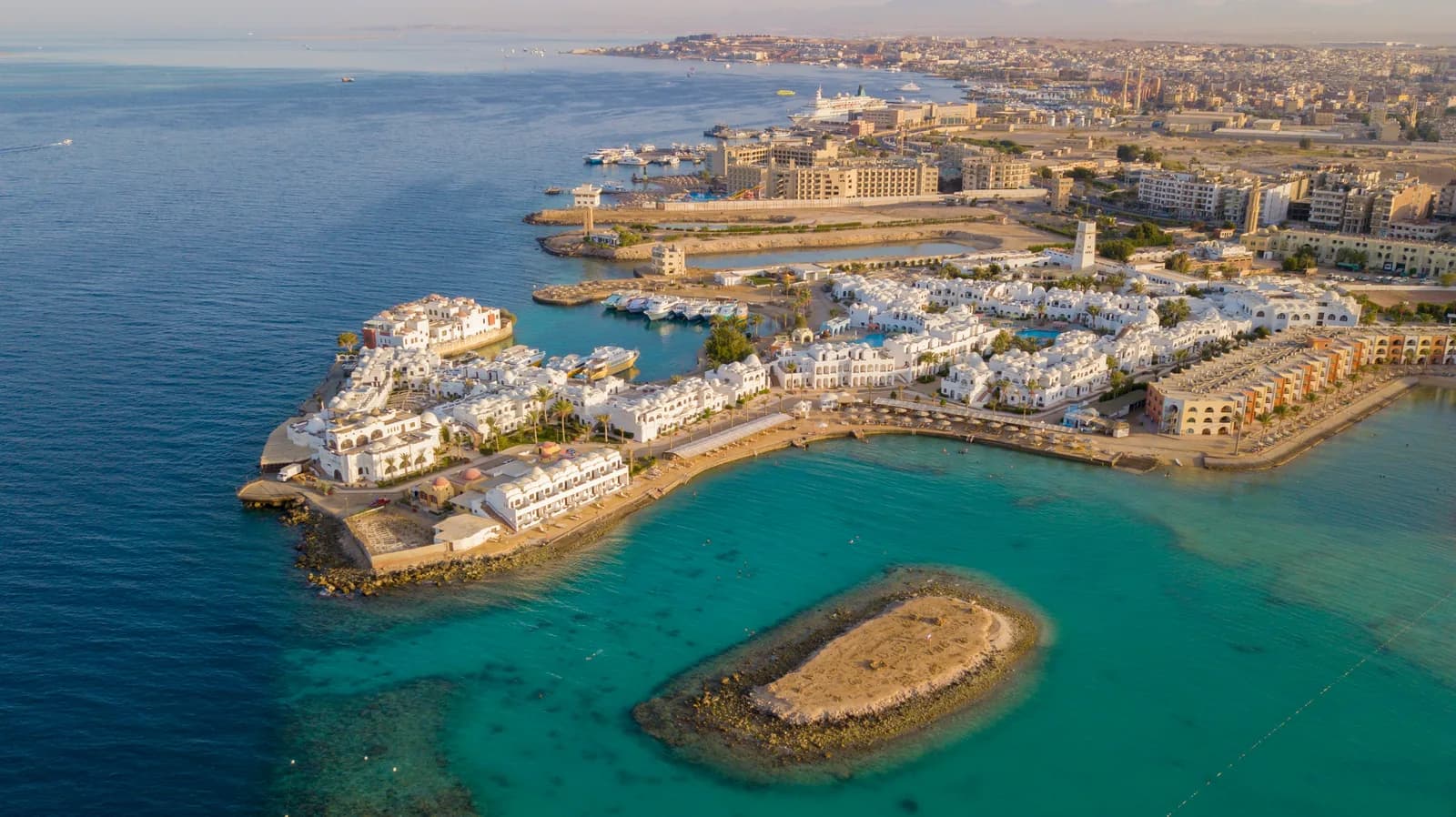
El Gouna, near Hurghada in Egypt, is worth investigating. PADI's local diving guide describes February water around 22°C. This is practitioner-contributed guidance without a stated climate baseline, not a directly comparable AEMET normal.
That makes the Hurghada area worth a closer look. Ask a local operator about your dates and suitable equipment, especially for snorkelling or diving. Warmer water still does not tell you how long you can safely stay in.
Before booking: ask the hotel a specific question
“Do you have a pool?” is not enough. Ask which pool is heated during your dates, its target temperature, whether heating has an extra charge, and whether any maintenance closure is planned. Get the answer for the pool you will actually use, not a general description of the property.
For the sea, the RNLI warns that water at 15°C and below can seriously affect breathing and movement. Warmer water is not automatically safe. Follow its cold-water guidance: do not go alone, enter gradually, check conditions and have a safe exit. Respect beach flags and closures.
Sunroulette's destination pages show weather forecasts, not live sea-temperature measurements. Check the water and beach conditions separately, then decide whether this is a sea-swimming trip or a winter-sun trip with a pool.