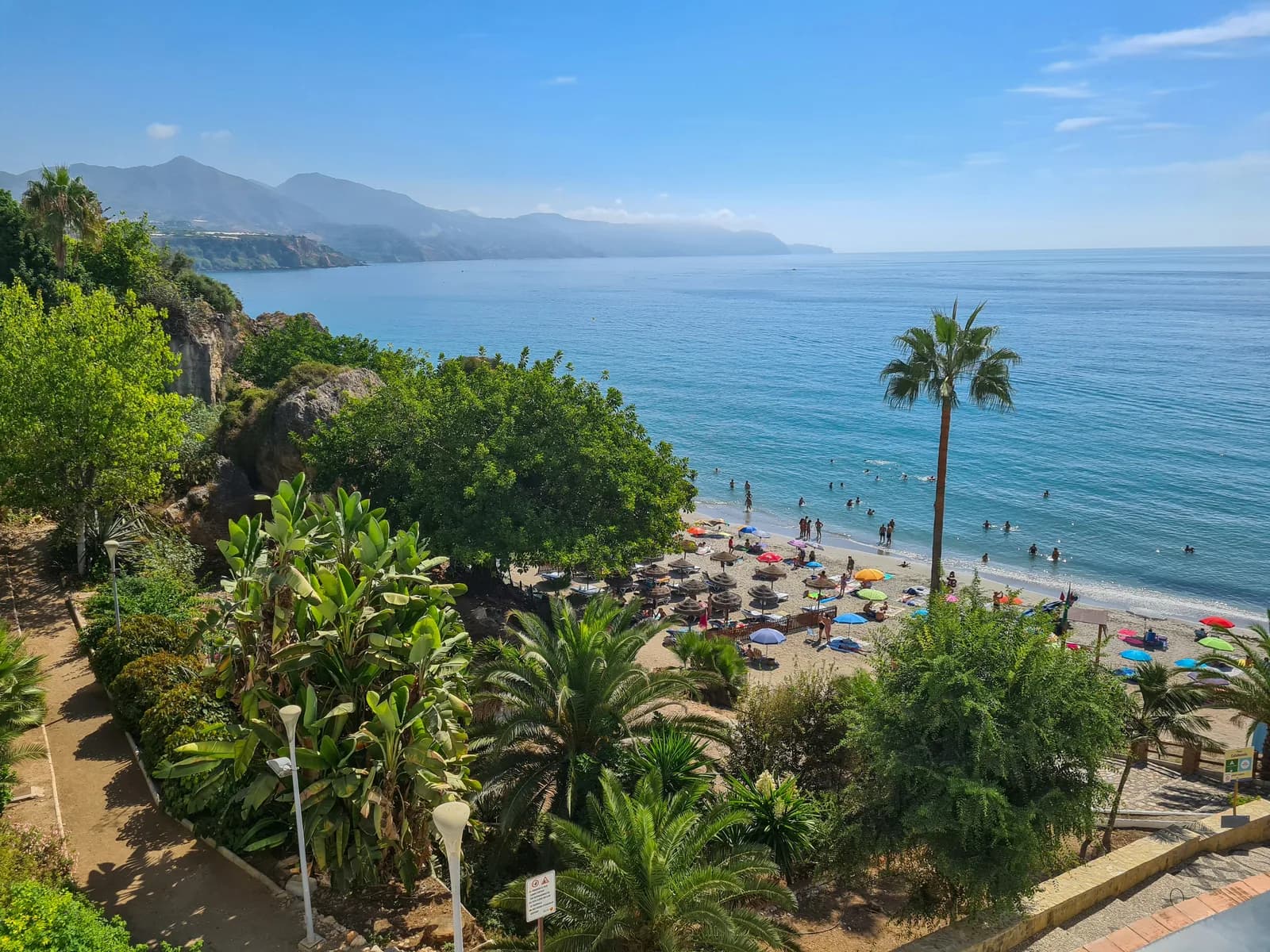
Málaga.
The airport city everyone flew through finally got noticed: forty museums, a Moorish castle over a Roman theatre, the espeto sardine ritual on the beach — and mainland Europe's mildest winter.
For decades Málaga was the Costa del Sol's luggage carousel — twenty million passengers a year collecting rental cars and driving to Marbella or Torremolinos without a glance at the city. Then Málaga spent twenty years and a lot of cultural-budget conviction turning itself into the best city break in southern Spain: the Picasso Museum (he was born here, two squares away), the Centre Pompidou's only outpost outside France, the Carmen Thyssen collection, a rehabilitated Soho district, and a tapas scene that Sevillanos now grudgingly visit. The beach is still there. The mountains behind got a walkway through a gorge. The airport stayed conveniently enormous.
When to go
The database says May, June, September, October, and the reasoning is clean: 24–29°C, the sea climbing from 18°C (May) to its 23°C September–October peak, terraces in full operation without the July machinery.
July and August are flagged — 32–36°C as the baseline, and the local wildcard is the terral, a dry inland wind that funnels down the Guadalhorce valley and shoves the city past 40°C for a day or two at a time. Malagueños respond by living at the beach and after dark; you can copy them, but you'd be paying peak prices for a city that's hiding from itself between noon and six.
Winter is the sleeper play: December–February days of 17–19°C, the mildest on the European mainland, with the museums, the castle and the long lunches working perfectly. Not a swim trip — the Mediterranean here bottoms out around 15°C — but as a January city escape it's nearly unbeatable, and we've made that case in the winter months guides.
Getting there
Málaga–Costa del Sol (AGP) is one of Europe's most-served airports — year-round low-cost routes from everywhere, which keeps fares low and the spontaneous weekend viable. The Cercanías C1 train runs airport-to-centre in 12 minutes for under €2 (the same line continues to Torremolinos, Benalmádena and Fuengirola — the cheap-resort trick covered in our budget guide). A taxi to the centre is €20–25.
Where to stay
Stay in the historic centre (between the cathedral and the Picasso Museum) for the full pedestrian version, or Soho just south of it for the street-art-and-coffee district with five minutes' walk to both old town and port. La Malagueta, across the park, puts the city beach out your door at the cost of a ten-minute walk to everything else.
Luxury — Gran Hotel Miramar
The 1926 seafront palace east of the bullring, reopened in 2017 with its wedding-cake facade and palm court intact: pool garden, spa, sea-view balconies. Around €280–360/night in season. Old-world grand done properly. Check rates on Booking →
Mid-range — Hotel Molina Lario
Sharp, comfortable rooms a block from the cathedral with the city's best-positioned rooftop pool — you swim at eye level with the bell tower. Around €150–200/night. The default recommendation. Check rates on Booking →
Budget — Hotel del Pintor
Small, friendly, white-and-red rooms named for the city's painter, in the pedestrian heart by the Thyssen. Around €90–120/night. Check rates on Booking →
The city in three layers
Málaga stacks 3,000 years in one hillside. The Roman theatre (1st century BC, free) sits at street level; directly above it climbs the Alcazaba, the 11th-century Moorish palace-fortress that is Granada's Alhambra in miniature and a tenth of the queue; and above that, up a cypress path, the Gibralfaro castle ring-walk with the whole bay below. Do all three as one morning ascent (€5–6 combined for the two fortresses), then descend to the cathedral — nicknamed La Manquita, "the one-armed lady", for the south tower they never finished when the money went elsewhere.
Museum picks, honestly ranked: the Picasso Museum for the homecoming narrative (€12ish, quiet at opening), the Carmen Thyssen for the Andalusian 19th century the postcards came from, the Pompidou cube on the port if its current hang appeals, and the CAC contemporary space in Soho, free, frequently better than all of them.
The espeto ritual
The city's true culinary monument is the espeto: six sardines threaded on a cane, planted at an angle over olive-wood coals in a beached boat, salted, handed over with a lemon. Eaten with fingers, paired with a cold Victoria beer, repeated. The sardines peak in the summer months — the local rule is "months without an R" — and the espeto belt runs east through Pedregalejo and El Palo, the old fishing quarters, fifteen minutes by bus 11 from the centre. Go at 14:00, pick any chiringuito with smoke rising from its boat, and order in plurals.
In town, the canon: El Pimpi, the sprawling bodega institution with barrel-signed walls (Picasso's daughter-in-law, Banderas — who co-owns it) — touristy, yes; still good, also yes; €25–35. Uvedoble for the modern-tapas counterweight. Atarazanas market mid-morning for the stained-glass window and the fried-fish bar at the back. And porra antequerana — the thicker local cousin of salmorejo — wherever it appears.
The Caminito del Rey day
An hour north of the city, the Caminito del Rey is the gorge walkway bolted into the walls of the Gaitanes canyon — a century-old hydro-workers' path, once "the world's most dangerous walk", rebuilt in 2015 into a spectacular, entirely safe 7.7 km one-way route a hundred metres above the river. Around €10–18 with the shuttle bus between ends; book online weeks ahead in season, wear the helmet they give you, and take the morning slots before the heat. Trains run from María Zambrano station to El Chorro at the southern end.
The other classic radius: Nerja and Frigiliana east (the cave system and the prettiest white village on this coast), Ronda inland (the gorge-split town, 1h45 by train), and Granada's Alhambra at 90 minutes — bookable as a day, kinder as an overnight.
Practical notes
- Getting around: the centre is pedestrian; buses cover the beach quarters; the Cercanías line is the resort artery. No car needed unless you're touring the white villages.
- Sea honesty: city beaches are functional grey-sand with full services — pleasant, not paradise. The postcard coves are at Nerja and Maro, 50 minutes east.
- Crowds: Semana Santa (Easter week) is enormous here — processions all week, hotels triple. Book far ahead or pick another week, deliberately.
- Money: Euro; cards everywhere, but the espeto boats appreciate cash.
The summary
Fly into AGP, take the 12-minute train, base at the Molina Lario. One morning for the Roman-Moorish hill stack, one for Picasso and the Thyssen with an Atarazanas lunch, one full Caminito del Rey day booked ahead, one afternoon bus to El Palo for espetos done correctly, and El Pimpi once because everyone needs the photo. May, June, September or October for the full version; January for the secret one. The Costa del Sol's best destination was hiding at the airport all along.