Which Canary Island? The honest decision tree.
The weather won't decide for you — all four majors run the same 21–22°C winter. What differs is everything else: Tenerife's altitude, Gran Canaria's variety, Lanzarote's design discipline, Fuerteventura's sand. Pick by personality.
Here's the liberating fact about choosing a Canary Island: the weather can't make the decision for you. All four major islands run the same product — 21–22°C winter days, 26–28°C summers, an Atlantic between 19 and 22°C, the occasional calima — with only micro-differences (the eastern pair are a touch windier and drier; every island's north is greener and cloudier than its south). The winter guides treat them as one climate for good reason.
So the choice is entirely about personality. Four islands, four characters, stated honestly.
Tenerife: the most of everything
Tenerife South is the volume answer and earns it: the deepest flight network and resort infrastructure, Spain's highest mountain delivering the islands' single best day (the Teide sunset-and-permit ritual), resident whales offshore, La Gomera a 50-minute ferry away, and a resort taxonomy from party (Las Américas) to polish (Costa Adeje) to actual-town charm (El Médano). Trade-off: the south coast is purpose-built and looks it; charm requires choosing your base deliberately. Pick it for: first Canaries trip, mixed groups, anyone who wants the mountain day.
Gran Canaria: the variety play
Gran Canaria packs the most different days into one island: Maspalomas' Sahara-grade dunes, a genuinely great Spanish city (Las Palmas, with Europe's best urban beach at Las Canteras), an interior of almond-blossom villages and Roque Nublo at 1,800 m, and Europe's only coffee plantations in the Agaete valley. It also hosts Europe's most established LGBT resort scene at Playa del Inglés, and February's carnival is among the world's largest. Trade-off: no single sight matches Teide's drama. Pick it for: restless types who want city-plus-beach-plus-mountains, carnival season, the dunes at dawn.
Lanzarote: the designed island
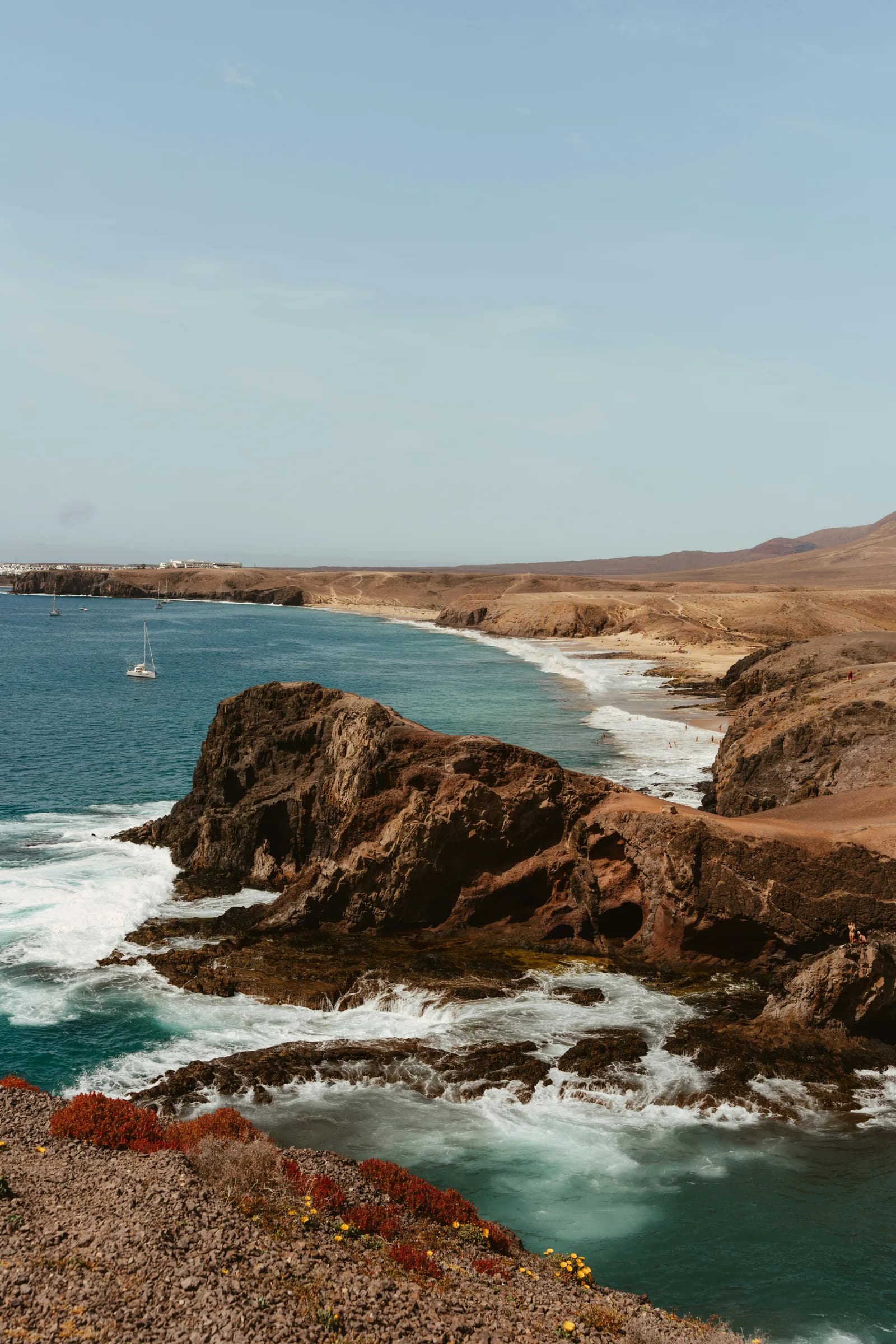
Lanzarote is the aesthete's Canary — one artist (Manrique) talked an entire island into white paint, low buildings and zero billboards, then built attractions into the volcanic landscape: lava-tube concert halls, cliff-face lookouts, a house inside volcanic bubbles. Add Timanfaya's fire mountains and wine grown in black ash funnels, and it's the most coherent place in the archipelago. Trade-offs: the beaches, while good (Papagayo), trail Fuerteventura's; it's the windier side of the group. Pick it for: design and wine people, couples, anyone who shudders at resort sprawl.
Fuerteventura: the beach specialist
Fuerteventura has more sand than the other three combined — the Corralejo dunes, Sotavento's tidal lagoon, wild Cofete — and Europe's best learn-to-kitesurf water. Trade-offs, stated plainly: the wind that built those beaches blows on you too (it's in the island's name), and the inland is handsome desert emptiness rather than sights. Pick it for: beach-first holidays, wind-sport ambitions, families who measure trips in sandcastle hours (El Cotillo's lagoons).
The quick matrix
First visit, want it all → Tenerife. City life plus nature variety → Gran Canaria. Design, wine, volcanic drama → Lanzarote. Sand and wind sports → Fuerteventura. Walkers and green-island romantics → the small ones (La Palma, La Gomera — no guides yet, said honestly, both lovely and quiet). And whichever you pick: the heated-pool filter matters in winter, the south coast beats the north for sun hours, and the inter-island ferries (Lanzarote–Fuerteventura is 30 minutes) mean a two-island trip is always on the table.