Hurghada.
Europe's winter swimming pool: 22°C water in January, the Red Sea's easiest reef access, the Giftun islands done right — and the honest maths on all-inclusives, house reefs and why this is the place to learn to dive.
Hurghada solves one problem better than anywhere else in short-haul range: it is the closest place to Europe where the sea is genuinely warm in January. Not Canaries-brave warm — warm: 21–22°C water under 22°C winter sunshine, five hours from the northern capitals, with coral reefs starting where the hotel beach ends. The town itself is a forty-year-old tourism machine with the aesthetics of one; the Red Sea in front of it is among the richest, clearest, most accessible marine environments on the planet. You come for the second thing and make peace with the first.
The honest framing up front: this is a resort-compound destination. The hotel you pick is the holiday — its beach, its house reef, its kitchen — to a degree that's true almost nowhere else we cover. So this guide spends its energy on exactly that choice, and on the water.
When to go
The database's window — March, April, May, October, November, December — plus the January–February winter that is the destination's entire reason for being.
Winter (December–February): 21–24°C days, sea 21–22°C, the product itself; evenings drop to 12–14°C and the wind can blow — bring a layer, as the January guide notes. March–May: the balance months — 26–30°C, sea climbing 23–25°C, visibility superb; March called it the best-balanced Red Sea month and stands by it. October–November: 30–27°C with a 26–25°C sea still holding summer's warmth — arguably the year's best water.
June–September is flagged: 35–40°C, a furnace tempered only by the sea breeze, manageable strictly as a dive-eat-sleep itinerary and priced accordingly cheap. The study flags it; we do too.
Getting there
Hurghada (HRG) is a charter-and-low-cost hub with year-round lift from most of Europe — winter fares are routinely the cheapest warm-sea tickets on the board. Most European passports buy a visa on arrival (25 USD, bring cash) or e-visa ahead. Hotels run transfer desks; taxis exist with negotiation as a feature. The strip sprawls 40 km — Sahl Hasheesh and Makadi Bay south of town are the polished planned bays, El Gouna (30 minutes north) is the upscale lagoon-town alternative with its own ecosystem, and town-centre Sakkala/Dahar is where actual Egypt continues regardless.
The house-reef rule
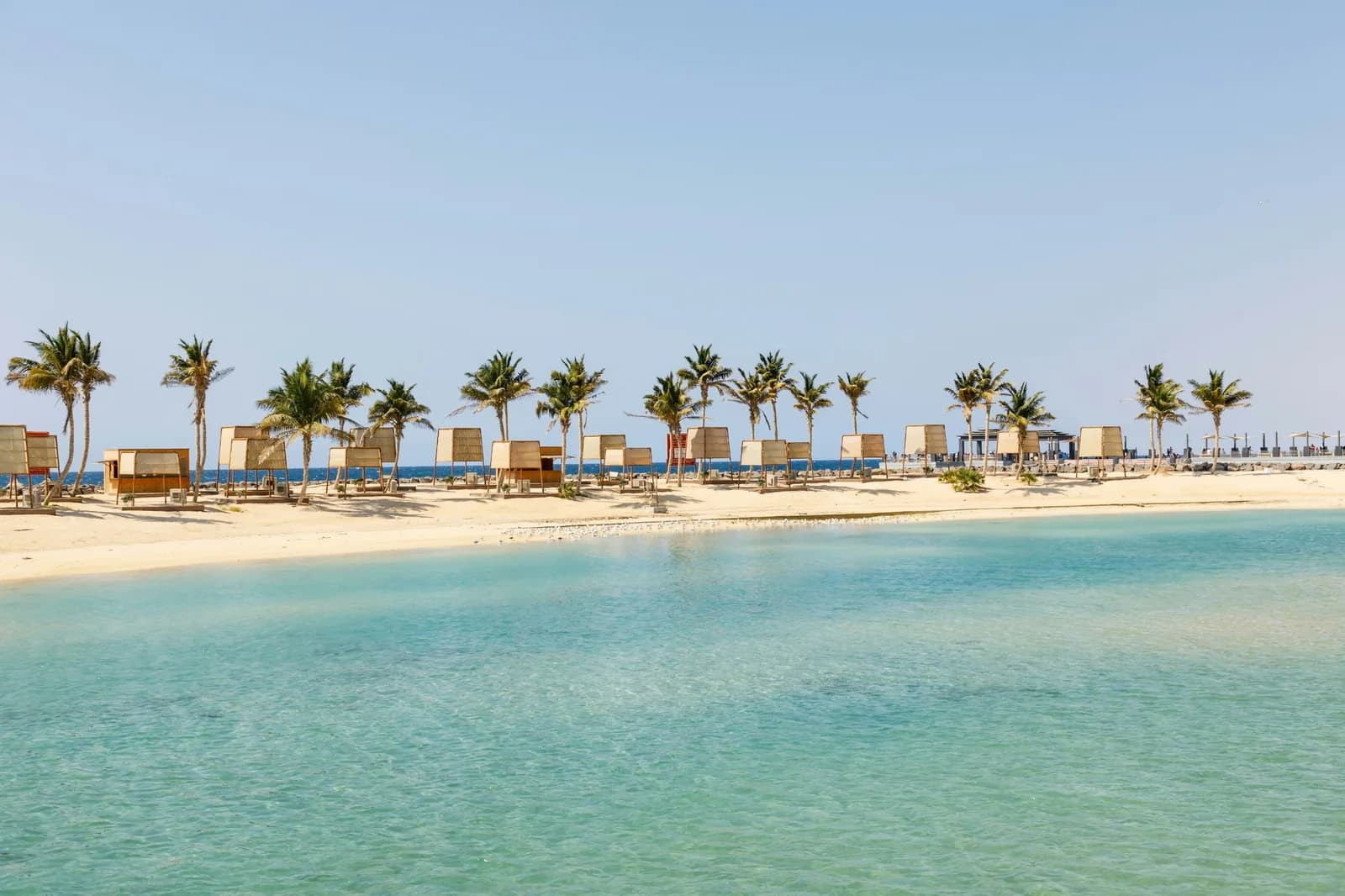
Here is the one decision that outranks all others: pick the hotel for its house reef, not its lobby. The coast divides into properties on sandy bays (swimming-pool sea, boat required for coral) and properties whose jetties end on living reef walls — where you fin over coral gardens at 08:00 before breakfast, every day, included. The brochure photographs look identical; the holidays do not. Search the dive forums for "house reef" plus the hotel name before booking anything; the half-hour pays for itself daily.
Luxury — The Oberoi, Sahl Hasheesh
All-suite serenity on a private bay: domed ceilings, courtyard suites, a long quiet beach and service from the subcontinent's best playbook. Around €280–360/night. The escape-the-machine option. Check rates on Booking →
Mid-range — Steigenberger Aldau Beach
The strip's dependable flagship: big gardens, a proper stretch of sand, aquapark adjacency for families and standards that survive full occupancy. Around €150–200/night, usually all-inclusive. Check rates on Booking →
Budget — Sunrise Holidays Resort
Adults-only, central, sensible: around €70–100/night all-inclusive, which is the price bracket where Hurghada embarrasses the Canaries. Check rates on Booking →
The all-inclusive maths, honestly: outside the hotels there is little independent restaurant culture worth leaving for (exceptions below), so AI here — unlike in Spain or Greece — costs you almost nothing in foregone experience. It's the rare destination where we don't argue with the wristband.
The water — what you're actually here for
Snorkelling is the headline even for non-divers: the Giftun island reefs and the house-reef walls run parrotfish, angelfish, morays and turtles in five metres of glass. Giftun day trips (€25–45 with lunch) are the standard excursion — the honest version: book a small-boat or "snorkel-focused" operator over the party catamarans, skip anything promising "Orange Bay" at midday (the Instagram sandbar operates at capacity), and morning departures get the reefs before the fleet.
Learning to dive is Hurghada's best-value product on Earth terms: warm, calm, clear water and industrial-strength instruction mean a PADI Open Water course runs €250–320 — half Mediterranean prices for better conditions. Established names (Colona, Orca, the dive-club hotels) keep European standards; verify CDWS licensing and small group sizes, then trust the process. Certified divers day-boat to Careless Reef, Umm Gamar and the El Mina wreck for €60–90 with two tanks.
Kitesurfing owns the southern bays (Makadi, Soma): steady cross-onshore wind, standing-depth lagoons, schools by the dozen.
Beyond the wristband
- El Gouna — the architect-planned lagoon town: marina restaurants, kite lagoons, a polish the strip lacks. An easy half-day or the alternative base entirely.
- The desert evening — quad or jeep into the Eastern Desert hills for sunset, Bedouin tea and a sky full of stars (€25–40). Pick operators advertising small groups; the 40-quad convoys deliver dust, not silence.
- Hurghada's fish market ritual — at the Sakkala market you buy from the ice (calamari, snapper, prawns by the kilo) and the row of grill houses behind cooks it for a couple of euros' service. The town's best independent meal. Star Fish restaurant formalises the same idea with tablecloths (€10–18).
- Luxor — the day trip that outclasses every excursion desk: Karnak, the Valley of the Kings and the West Bank are 4 hours each way by convoy bus (€60–90 with guide and entries). A brutal 16-hour day and the best thing many visitors do all year. If antiquity matters to you, consider two Hurghada trips: one for the sea, one routed via Luxor entirely.
Practical notes
- Money: Egyptian pounds for town; euros/cards inside resorts. Tipping (baksheesh) is the operating system — small notes constantly.
- Sea honesty: winter mornings can blow 20 knots — the reefs in the lee still work; the kite schools celebrate.
- Hassle calibration: bazaar persistence is real in town, nonexistent inside compounds; a firm cheerful la shukran is the entire toolkit.
- Sun: the desert UV index ignores the mild air temperature — reef-safe sunscreen and a rash vest save both your shoulders and the coral.
- Alcohol: resort bars pour freely; town options are thin. Local Stella (the lager, not the Belgian) and Sakara do the job.
The summary
Fly HRG on the cheap winter lift, choose the hotel by its house reef (the Oberoi for quiet money, the Steigenberger for families, the Sunrise tier for value), and structure the week around water: house reef each morning, one small-boat Giftun day, one dive course or two-tank day, one desert sunset, one fish-market dinner in Sakkala — and the Luxor long-day if the pharaohs outrank the parrotfish. December to May. Hurghada is not a charming town and doesn't pretend to be; it is the most reliable warm sea a European winter can buy, with the best cheap diving on the map.