Where is cool in Europe right now? The shade list.
The places that hold 14–25°C while the south burns: the Norwegian coast, the Atlantic islands, the Baltic, the cool cities — and one Alpine valley. With the trade-offs stated plainly.
Every July the same search spikes across Europe: not "where is hot" but its inverse. Spain is somewhere past 42°C, the news is showing tourists queuing for fountains in Rome, and a holiday that promised sun now promises heatstroke. The question becomes where it's cool — and most travel sites have no answer, because their entire catalogue points south.
We keep a separate list for this. The same search tool that ranks sun destinations flips to shade mode and re-ranks for comfort instead: it rewards 18–25°C, penalises the heat the southern list rewards, and reads the same live 14-day forecasts. That's the real-time answer for your dates and your airport. What follows is the standing geography behind it.
The Norwegian coast, in rising order of latitude
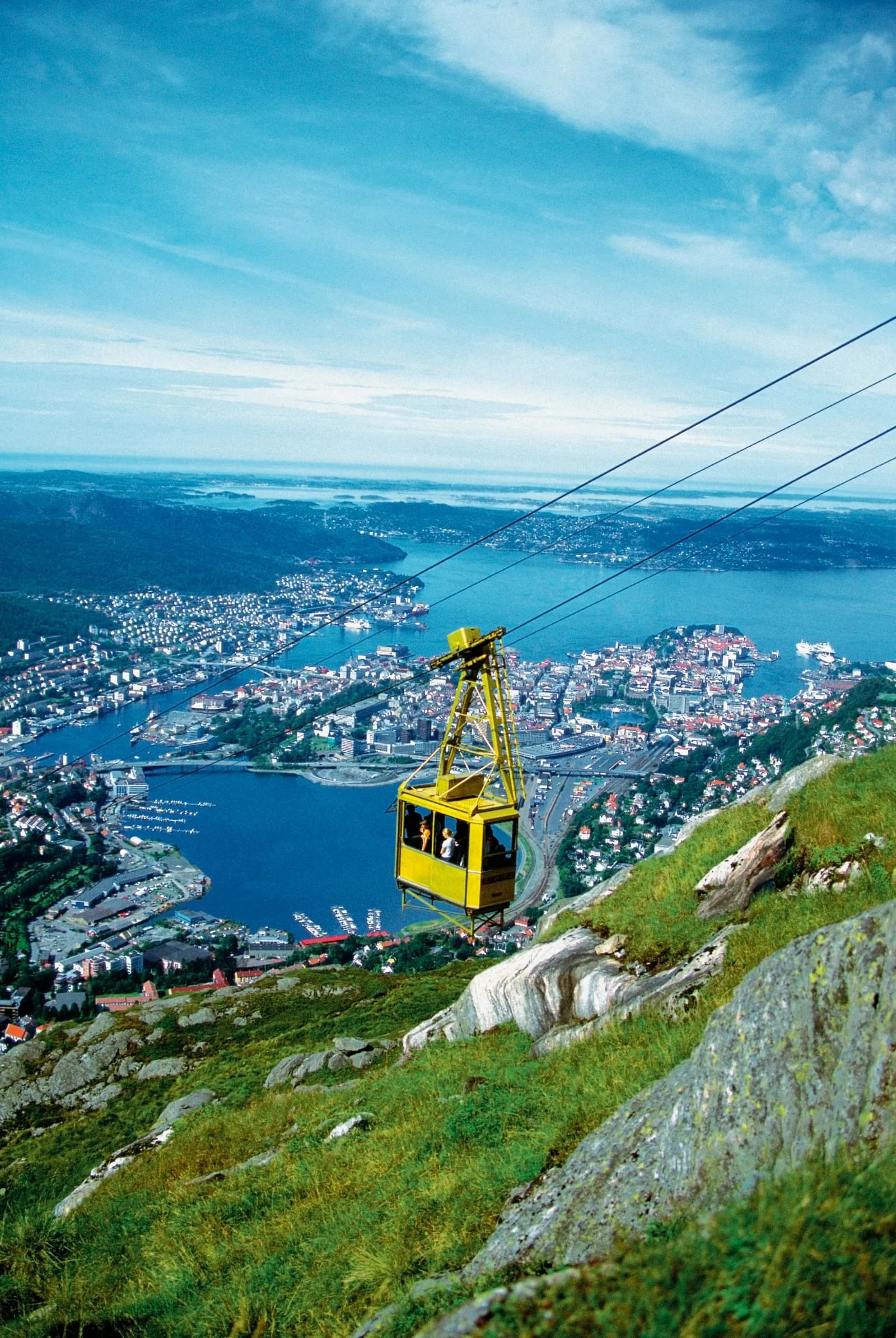
Bergen is the entry point: 18–20°C on a good summer day, the fjords forty minutes away, and a food scene that has quietly become one of Scandinavia's better ones. The famous rain statistic (240 wet days a year) hides the useful detail that August is among the drier months.
Helgelandskysten is the stretch most non-Norwegians have never heard of — the coast between Trondheim and Bodø, with the Seven Sisters range dropping into the sea, the hat-shaped Torghatten mountain, and the UNESCO-listed Vega archipelago. Summer highs sit in the mid-to-high teens. It is the quietest entry on this list by a distance.
Lofoten runs white-sand beaches against 1,000-metre granite walls, above the Arctic Circle. The sea rarely passes 13°C — surfers at Unstad wear 5mm of neoprene in July — but the midnight sun means a hike at 23:00 in full daylight. Mid-teens by day, and the most photogenic landscape Norway owns.
Tromsø is the far end: 12–16°C in summer, permanent daylight from late May to late July, whale and fjord traffic out of the harbour all season. If the goal is maximum contrast with Seville, this is it.
The islands that don't overheat
Reykjavík averages 14°C in July. For someone leaving a 40°C heatwave that number reads like a typo, then like relief. Geothermal pools take the edge off the evenings, the Golden Circle and the south-coast waterfalls run on near-endless daylight, and summer accommodation is the one thing that sells out — book three months ahead.
Isle of Skye holds 16–19°C and rains on more days than not, which is the honest price for the Cuillin ridge, the Quiraing and the Fairy Pools. July and August are midge season; a head net costs £8 and is not a joke purchase.
Newquay and the Cornish coast reach about 20°C in August with a Gulf Stream sea at 17–18°C — properly swimmable for Northern Europeans, character-building for everyone else. Cornwall's catch is the booking calendar: the good places for August are gone by February.
Bornholm is the Danish answer: 20–22°C in July, the sunniest corner of Denmark, smoked herring eaten as seriously as it sounds, and a Baltic that creeps toward 20°C by August. Of everything on this list, it comes closest to a conventional beach holiday.
The cool cities — when you want a city break, not a wilderness
The list above is mostly nature. But a heatwave escape doesn't have to mean a fjord expedition — the Nordic capitals and coast cities are temperate, walkable, light until late, and built around water you can swim in. Each has its own full guide:
- Copenhagen — 22°C, harbour baths in the city centre, the most liveable warm-weather city break in Europe.
- Stockholm — a capital across 14 islands with 30,000 more by steamboat at the doorstep.
- Helsinki — a Baltic design city where you ferry to a sea fortress and sauna between swims.
- Oslo — fjord islands you swim off a public ferry, floating saunas, the opera-house roof (the warmest of the cool cities — it can spike).
- Gothenburg — Sweden's seafood coast and a car-free archipelago, an hour from Oslo.
- Trondheim — the medieval cathedral city, dependable high-teens, far enough north to shrug off heat.
- Kristiansand — Norway's mildest coast, real sand beaches and the country's best family zoo (the warm, beachy end).
- Strömstad — a quiet border spa town and the gateway to the car-free Koster islands.
And west, on the Atlantic, the "never-sweat" tier — cool by guarantee, sold on light and coast rather than swimming:
- Reykjavík — the biggest delta of all (13–15°C vs the Med's 30s), 21 hours of July light, geothermal pools at midnight and the Golden Circle at the door.
- Galway — the Wild Atlantic Way's trad-music capital, cold dips off the Salthill tower, the Cliffs of Moher and Aran Islands beyond.
- Cork — Ireland's food capital, the 1788 English Market, the Titanic harbour at Cobh — a gentle 18°C that often never reaches 25.
Altitude instead of latitude
Zermatt solves heat by going up rather than north. At 1,620 metres the August nights still drop below 10°C, and a cable car puts you at 3,883 metres — on snow — the same afternoon. Swiss prices apply, but so does Swiss reliability: in a heatwave summer, a car-free village under the Matterhorn at 20°C is a strong trade.
What you trade
None of these is a substitute for a Mediterranean beach week, and pretending otherwise is how people end up disappointed in a beautiful place. The seas run 13–20°C against the Med's 24–27. Rain is a live possibility everywhere except a Baltic high-pressure week. Evenings want a jacket.
What you get back is the original point of a summer holiday: being outside, all day, comfortably. If you want the halfway version — warm and swimmable without the furnace — that's a different list, the Atlantic one, and we wrote it up separately in hot, but not too hot. And if your dates can move instead of your destination, June and September solve the Mediterranean problem entirely; the month-by-month guides cover that trade.
The deeper background sits in our climate study, and the coolcation guide walks the same ground with hotels and logistics per destination.