Gothenburg.
Sweden's friendly second city on the cool Skagerrak: a car-free archipelago a tram-and-ferry hop from the centre, the country's best seafood, Liseberg for the kids — and an hour from Oslo. Atlantic-tempered, never a furnace.
Gothenburg is the west-coast counterweight to Stockholm: lower-key, friendlier, and turned toward the open Skagerrak that keeps it cool. Sweden's second city trades the capital's grandeur for a seafaring ease — canals dug by Dutch engineers, a tram network that doubles as a sightseeing ride, the country's most serious seafood culture, and a southern archipelago of car-free granite islands you reach on a normal transit ticket. It's an easy hour's hop from Oslo, an underrated city break in its own right, and — fed by that Atlantic-adjacent sea — reliably temperate when the continent overheats.
Honest framing: peak summer sits at 20–22°C, tempered by the open water, with only the rare warmer spell. Cooler and breezier than Stockholm; the archipelago is the built-in escape.
When to go
June to August, with the long Nordic light. June has Midsummer and the freshest islands; July is warmest and the locals decamp to the coast; August holds the warmth with the city repopulated and a strong festival run (Way Out West in early August). Cooler shoulder months (May, September) are bright and cheap.
Getting there
Gothenburg Landvetter (GOT) is 20 minutes out by the Flygbussarna airport coach to the central station. (Note: low-cost carriers sometimes use Gothenburg City/Säve — check which.) The city is compact and the tram network is the joy — buy a day ticket, ride the vintage and modern lines, and use the same ticket for the archipelago ferries from Saltholmen.
Where to stay
Base around the centre (Inom Vallgraven, inside the old moat — walkable to everything), trendy Haga/Linné (cobbles, cafés, vintage), or near the harbour.
Scandic is the dependable Nordic default and runs several central hotels — browse Scandic's Gothenburg properties (Scandic Rubinen on the Avenyn and Scandic Europa by the station are well placed), breakfast included, bookable without research. The design and boutique end sits in the Booking strip below.
The southern archipelago — the best day
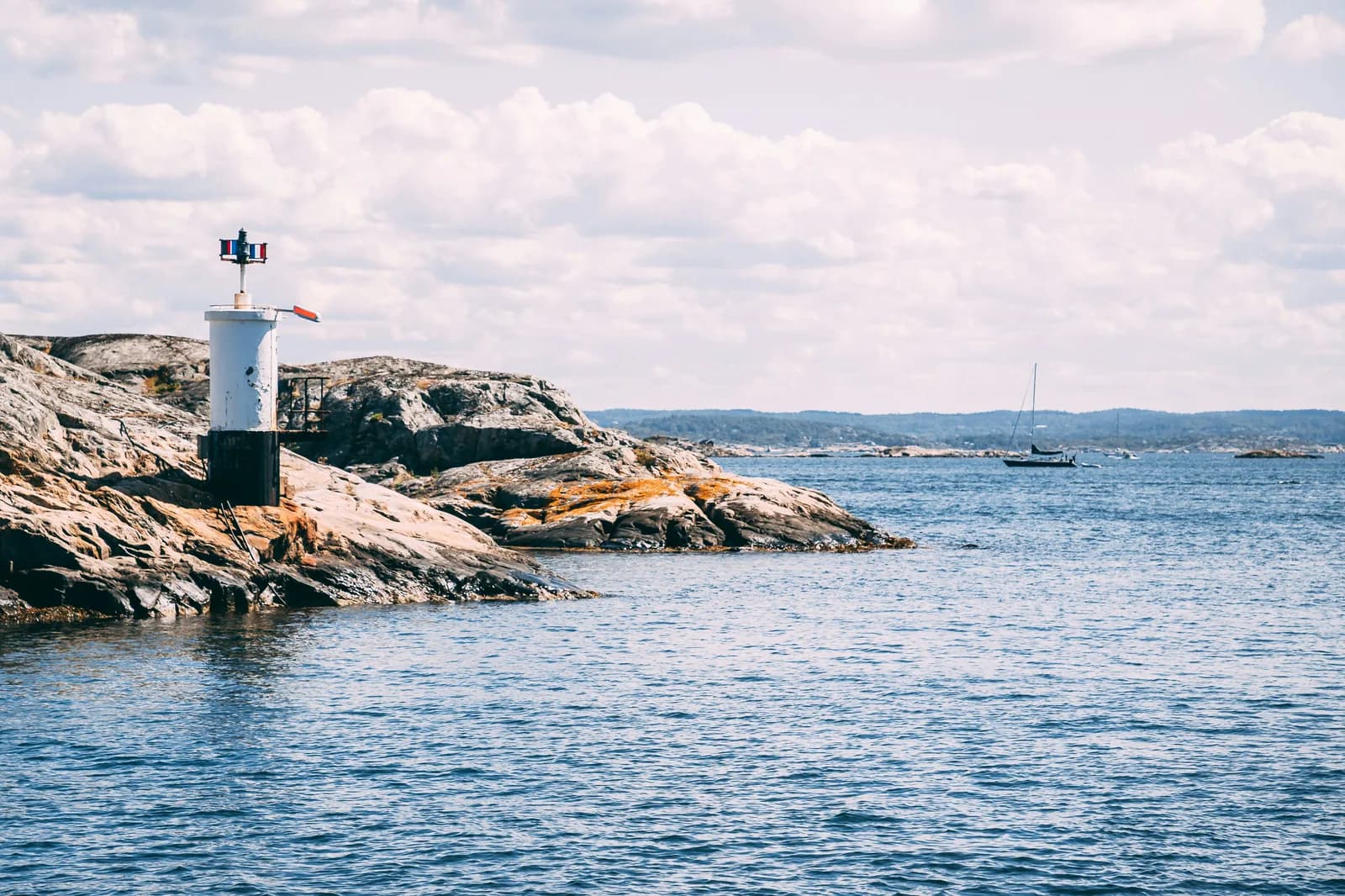
This is Gothenburg's secret weapon and it's gloriously easy: take tram 11 to Saltholmen, then a ferry on the same ticket out to the car-free southern islands.
- Styrsö and Brännö — the classic pair: granite-and-meadow islands of red wooden cottages, swimming rocks, a summer dance floor on Brännö's jetty (the Brännö brygga dances are a tradition), cafés and quiet lanes. No cars, just bikes and feet.
- Vrångö — the outermost: a nature reserve, the best beaches and birdlife, the end-of-the-world calm.
- Donsö / Köpstadsö — the fishing-and-quiet alternatives.
Pack a swimsuit and a picnic, island-hop on the ferries, swim off the rocks into the cool Skagerrak. A full, brilliant, cheap day.
The city itself
- Haga — the cobbled former working-class district, now the city's most charming quarter: wooden-and-stone landshövdingehus houses, vintage shops, and the café ritual built around the Haga bulle, a cinnamon bun the size of a frisbee. The essential fika.
- Feskekôrka — the "fish church", a neo-Gothic indoor fish market (recently restored) that looks like a place of worship and serves the city's seafood obsession.
- Liseberg — Scandinavia's biggest amusement park, right in the city: woodland setting, serious coasters, the family magnet. (Open seasonally — check dates.)
- The harbour and Lindholmen — the post-industrial shipyard side, now museums (the Maritiman floating ships, the Universeum science centre and rainforest) and the ferry-buzz across the river.
- Trams and canals — ride a vintage tram for the city tour, or take a Paddan canal boat under the low bridges (duck) for the water-level version.
The food — Sweden's seafood capital
Gothenburg takes shellfish seriously: the shrimp sandwich (räkmacka, piled absurdly high) is the civic dish, the langoustines and oysters of the Bohuslän coast are the pride, and the fish soup is everywhere.
- Feskekôrka and the Saluhall (the grand market hall) for the seafood graze.
- Sjömagasinet (a Michelin-starred former shipping warehouse) for the splurge; Gabriel above the fish church for the räkmacka with a view.
- A shrimp boat cruise out into the archipelago, peeling fresh-caught shrimp on deck, is the summer ritual if you have a half-day.
- The Haga bulle and coffee close every afternoon.
Day trips worth taking
- Marstrand (1 hour north) — the Bohuslän sailing town with the Carlsten fortress on its island; the west coast's prettiest day out.
- The Bohuslän coast — Fjällbacka, the granite skerries, the cold-clear bathing; a self-drive or bus up the coast Ingrid Bergman loved.
- Strömstad and the Koster islands (covered in our Strömstad guide) — further up the same coast toward the Norwegian border.
Practical notes
- Money: Swedish kronor; cashless — cards and phones, even on the ferries.
- The tram ticket is the key — day pass covers trams and the archipelago boats.
- Cost: Nordic-expensive, but gentler than Stockholm; the islands, the tram and the Haga bun keep it human.
- Light and layers: bright June nights, cool sea breezes — pack for both.
The summary
Fly GOT (or train the four pretty hours from Oslo). Ride tram 11 to Saltholmen and ferry out to Styrsö and Brännö for the swimming-and-island day, do the Haga bun and a Feskekôrka seafood lunch, give the kids Liseberg, take a Paddan boat under the bridges. June to August, an hour from Oslo, 21°C and Atlantic-cooled. The friendly, fishy, easy Swedish city — and a proper cool-summer escape.