Hot, but not too hot: Europe's summer sweet spot.
Between the 42°C Mediterranean and the 14°C coolcation sits a band of coast that holds 24–28°C with a sea you can actually swim in. It's mostly Atlantic. Here's the honest map.
The coolcation conversation tends to jump straight from one extreme to the other: either you bake in Andalusia or you pack a fleece for Reykjavík. Most people asking "where is it cooler" don't actually want 14°C. They want roughly 25 — warm enough for the beach, cool enough to sleep, with no afternoon spent hiding from a heat warning.
That band exists, and it has a shape. It runs down the Atlantic façade of Europe, out to the Atlantic islands, and — in heatwave summers specifically — up to the Baltic. The ocean is the mechanism: water that never exceeds the low twenties caps the air above it, so the 44°C readings that hit inland Iberia physically cannot happen on these coasts. Our climate study flags the Mediterranean interior as a structural midsummer heat risk; the same data shows the Atlantic rim barely registering the heatwave years at all.
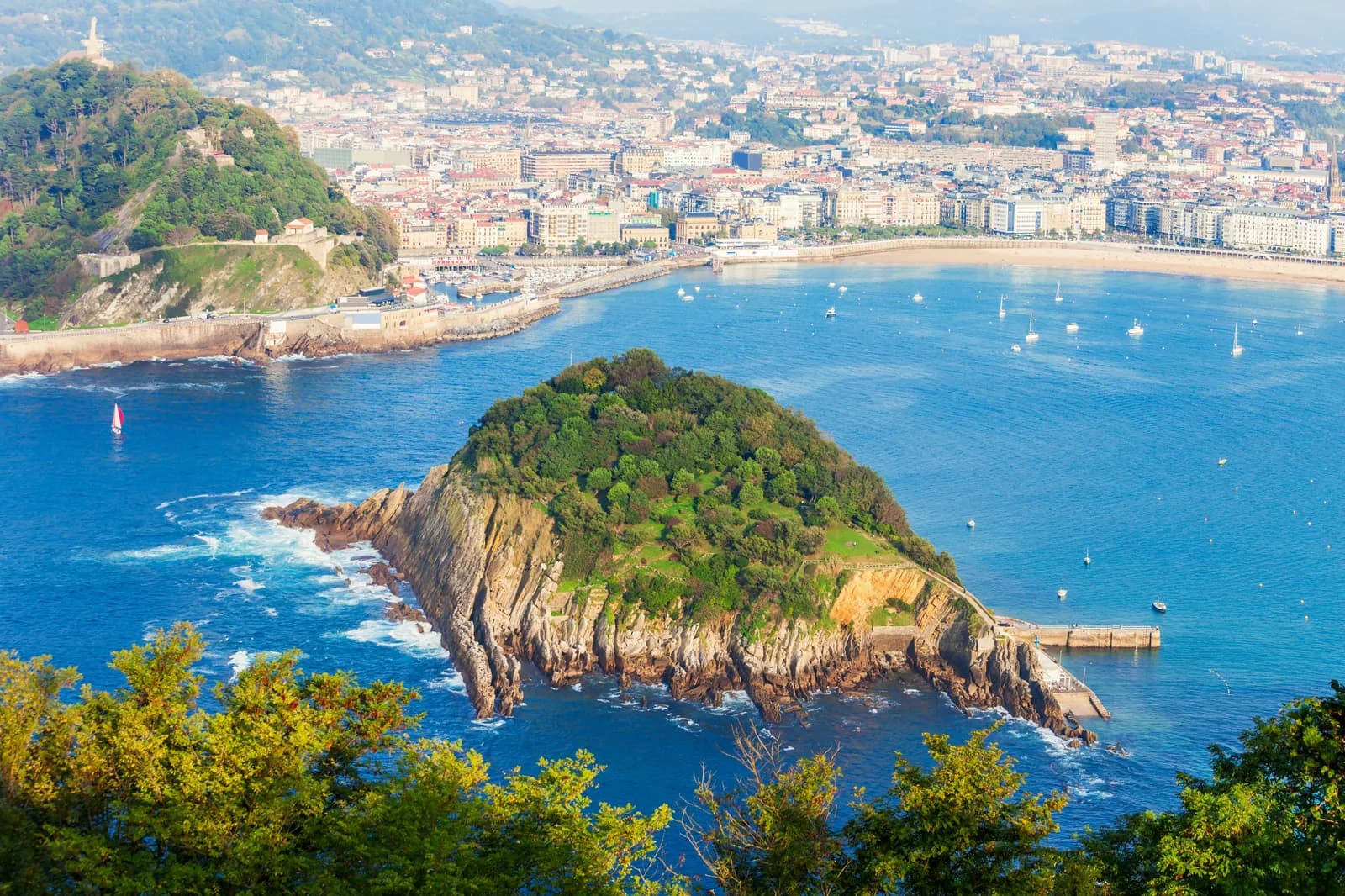
The Basque coast: San Sebastián and Biarritz
San Sebastián in July and August sits at about 25°C with the sea at 21–22°C. La Concha is one of Europe's great city beaches, the old town's pintxos bars carry the evenings, and when Córdoba hits 42, the gap between the two Spains is the entire argument. Biarritz, forty minutes up the coast, runs the French version: 25–26°C, surf culture, better pastries, the same ocean cap.
Two honest caveats. Biscay weather is Atlantic weather — a couple of grey, showery days in any given week are normal, even in July. And August is France and Spain's own holiday month, so neither town is a secret; book early and expect company. Busy at 25 degrees still beats quiet at 40.
The Algarve, with the wind doing the work
Faro is the warm end of this list: 30–33°C on July afternoons. What keeps it on the sane side of the line is the Nortada, the northerly wind that runs down Portugal's coast all summer, and an Atlantic that holds about 22°C. Heat arrives, the ocean and the wind cap it, and the 40-degree events that close restaurants in Seville — two hours east — generally don't cross the border intact. The full Faro guide covers the rest of the case, including the Ria Formosa ferry islands, which are the best cheap cooling trick in southern Europe.
Funchal and the island that ignores the calendar
Madeira runs the flattest temperature curve of any European destination: roughly 24–25°C in August, 20°C in January, sea between 19 and 23 all year. Levada walks in the cloud forest, a capital you can actually live in for a week, and a heatwave history that is mostly the absence of one — the exception is the leste, a Saharan east wind that pushes a few days past 30°C in some summers. It passes; the baseline returns.
The Baltic, in the summers when everything flips
Sopot and the Baltic rim are the opportunists' entry. A normal July is 22°C with a 20°C sea — pleasant, Nordic-adjacent, half the price of the Atlantic options. But in the heat-dome summers, when high pressure parks over the continent and the Mediterranean becomes unusable, the Baltic warms into the high twenties and briefly becomes the best beach weather in Europe. Watching the live ranking in those weeks makes the swap obvious.
When the answer is just June or September
If your dates can move, move them instead. The Mediterranean in June or September is everything July pretends to be — swimmable sea, 26–28°C, prices down a third — without the heat lottery. The September guide makes that case month by month. The Atlantic sweet spot is for the people locked to the school-holiday weeks; it solves July and August specifically.
And if even 25°C sounds like too much this year, the full retreat is mapped in the shade list.