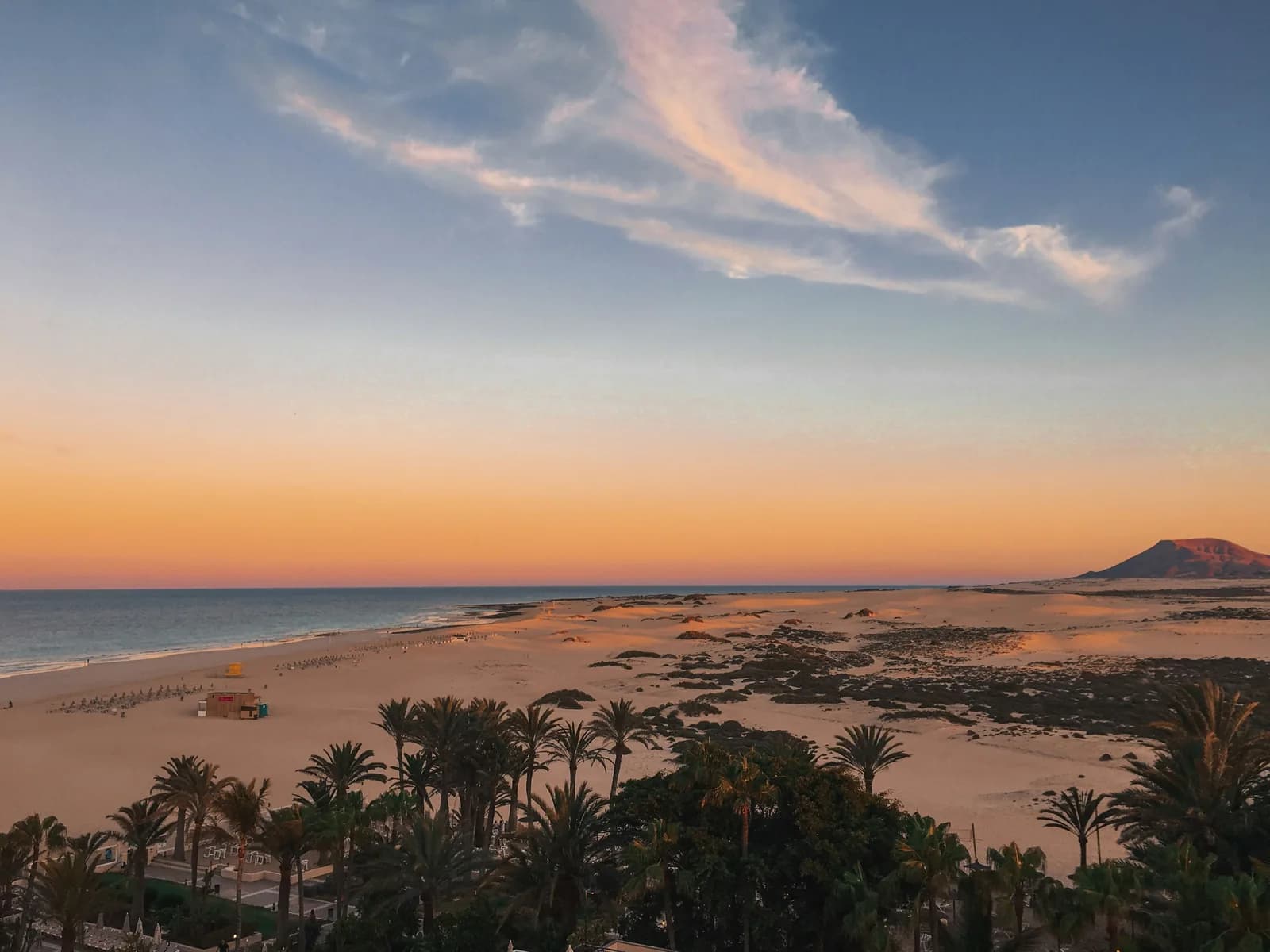
Are the Canaries warm in winter? The full answer.
Yes: 21–22°C and sunny — Europe's most reliable winter warmth, by a distance. Also no: it's not summer-hot, the sea is 19°C, the north coasts are cloudier, and evenings want a jumper. Everything the brochures round up, unrounded.
This is the most-asked question in European winter travel, and the honest answer needs both halves: yes, the Canaries are warm in winter — warmer and sunnier than anywhere else in Europe, reliably, every single week of it. And: no, they are not hot. A Canarian January is a perfect May day in Northern Europe, on repeat. People who internalise both halves have wonderful trips; people sold only the first half stand on the beach in February wondering why they're the only one swimming. Here's the full picture, number by number.
The numbers, plainly
Days: 21–23°C on the southern coasts from December through February, with 5–7 hours of sunshine — the January guide's figures, stable across two decades of records. Warm spells touch 25–26; the rare cool snap dips a day to 19. Nights: 15–17°C — terrace-dinner-with-a-jumper territory, never cold, never tropical. The sea: 19–20°C all winter — the warmest natural swimming on European territory in January, genuinely swimmable in the brisk, ten-minute sense and precisely why the heated-pool filter is the most valuable checkbox on a winter Canaries search. Rain: the south coasts collect a handful of wet days per winter month; fronts pass in hours, not weeks.
For calibration against the alternatives: mainland Spain's best (Málaga) runs 17–18°C with more cloud; Cyprus 17–19°C; Morocco 18–22°C with cold nights. Nothing in or near Europe matches the Canarian combination of warmth and certainty — that's not marketing, it's latitude 28 plus a trade-wind regime.
The geography that decides your week
South beats north, structurally. The trade winds stack cloud against every island's north side; the southern coasts sit in the rain shadow and bank the sunshine statistics. All the famous winter resorts — Tenerife's Costa Adeje, Gran Canaria's Maspalomas, Lanzarote's Playa Blanca, Fuerteventura's Jandía — are south-facing for exactly this reason. Book north (Puerto de la Cruz, Las Palmas) and you trade a few daily sun-hours for greenery and town life — a fair trade made knowingly, a disappointment made blind.
Altitude is a different climate. Teide wears snow most winters — you can genuinely sunbathe at sea level and throw snowballs at 2,300 m in the same afternoon, which is either two holidays in one or a packing problem, depending on preparation.
The wildcard: the calima — a few times each winter, Saharan dust hazes the sky and spikes temperatures for two or three days. Strange-looking, mostly harmless, covered in full in its own explainer.
What a winter week actually feels like
Mornings open around 18°C and build to a 13:00–16:00 peak made for the beach or the pool lounger; the sun drops early (18:00–18:30 — the subtropics don't do long evenings in January) and dinner happens in that jumper. Swimming is a deliberate, invigorating act rather than an ambient state; the heated pool carries the soak-time. Hiking, cycling and Teide-and-dunes sightseeing hit their annual best — this is, quietly, the islands' outdoor-activity peak season rather than their swimming one. And the product's real magic is statistical, not sensory: you can book any week of any winter month and know, months out, what you'll get — the only place in Europe where that sentence is true.
The verdict, by traveller
Want guaranteed warm sunshine, pool-based comfort and outdoor days in January → yes, emphatically, the Canaries (the chooser picks your island). Want hot — 28°C and a bath-warm sea in January → honestly, no: that's the Red Sea at five hours or the tropics at nine-plus. Want both halves priced: the Canaries cost mid-market and deliver certainty; the cheap-winter-sun rankings show where they sit in the value table. The brochure says "spring all year". For once, the brochure is roughly right — as long as you remember what spring actually is.