August, honestly.
The prosecution is right: peak heat, peak prices, peak crowds. The defence is also right: for half of Europe it's the only month on offer. Where August genuinely works, where it punishes — and the protocol that saves it.
This site spends eleven months a year talking people out of August — the August guide calls it the Mediterranean's worst deal, and the numbers (heat-risk flags, doubled prices, the meltemi at full blast) back it up. But the advice "just go in September" is useless to anyone with school-age children, a factory shutdown or a court-mandated holiday rota. Half of Europe holidays in August because half of Europe must. So here's the honest version for them: where August actually works, where it genuinely punishes, and the protocol that rescues the rest.
Where August genuinely works
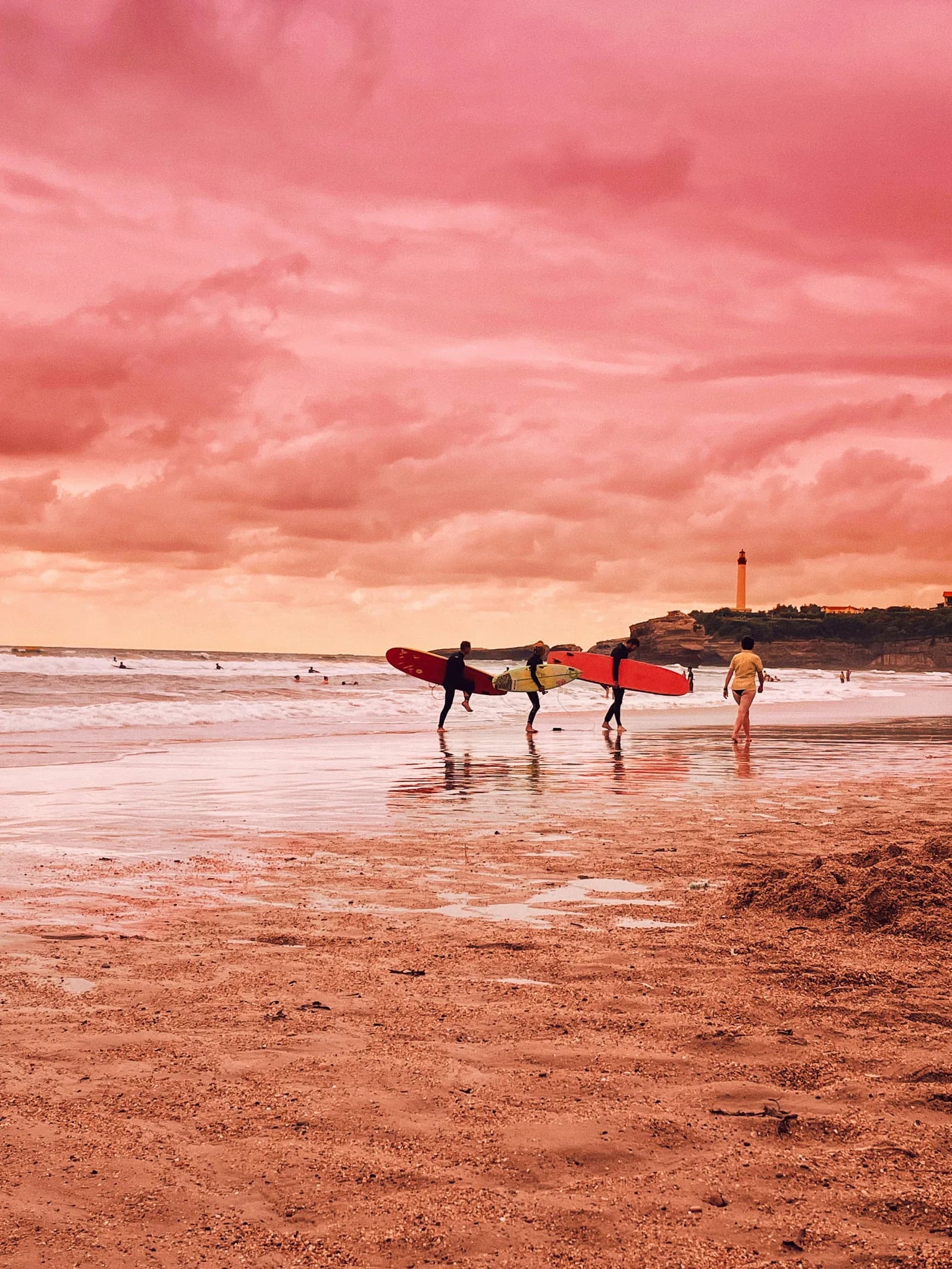
The Atlantic coast is the structural answer, covered in full in the sweet-spot piece: Biarritz and San Sebastián at 25–26°C with a 22°C ocean, Faro and the Algarve wind-capped at 30 while Seville bakes at 44. Busy — it's France and Iberia's own holiday month — but busy at a survivable temperature.
The Canaries quietly outperform their winter fame in August: 27–28°C, ocean-cooled, dry, with Fuerteventura's trade winds as free air conditioning. No heat-risk flags, full family infrastructure, and prices that rise less than the Med's because the islands' peak is January.
Madeira holds its eternal 24–25°C regardless of what the continent is doing.
The Baltic surprise: in heat-dome summers, Sopot and the northern coasts briefly become Europe's best beach weather — the August guide tracks this annually.
The breezier Greek picks: the Ionian (greener, meltemi-free) and Crete's coast handle August better than the inland mainland or the wind-tunnel Cyclades — with the honest caveat that "better" still means 31–33°C and full ferries.
Where August punishes
Inland Iberia and inland Greece (40°C+ as a pattern, not an event), city sightseeing anywhere south of Lyon, Mykonos and Santorini at maximum price-for-queue ratio, the Turkish riviera's 36–40°C humidity, and anything involving midday archaeology. The climate study flags these for good reason; August is when the flags fly.
The protocol that saves it
Booked into the heat anyway? The heatwave playbook carries the full version; the August-specific distillation:
- Coast over city, full stop. The sea keeps coastal air 5–8°C under inland readings, and a 25°C sea is the best climate control ever built.
- Book the siesta into the architecture: air conditioning confirmed (not "fans"), pool on premises, accommodation within a walk of the water. August is when these stop being luxuries.
- Run the Mediterranean clock: out by 08:00, sights done by 11:00, sea-pool-shade till 17:30, dinner at 21:30. Fighting this rhythm is how Northern Europeans lose Augusts.
- Book in February. August inventory never discounts — the good coastal stock sells out first, and late bookers inherit the inland ovens.
- Protect the ferry days if Greece is the plan — start-or-end of trip, never the day before the flight home.
The reframe
August's crowds are also August's case: the whole Mediterranean is alive, every festival fires, every beach bar runs its best night, and children remember the packed August beach as paradise, not as a logistics failure. The month is honest about what it is — Europe's collective holiday, at full volume, at full price. Book the geography that can absorb it, run the protocol, and August stops being a mistake and becomes what it always was for the people who had no choice: the summer.