Long-weekend winter sun: the 3–4 day maths.
A winter long weekend lives or dies on arithmetic: flight hours versus daylight hours on the ground. Where Thursday-to-Sunday actually pays — Marrakech, Málaga, Malta — and the honest cutoff where it stops working.
The winter long weekend is an arithmetic problem before it's a destination question. Three or four days, two of them clipped by travel: every flight-hour you add subtracts directly from time in the sun, there's no week-long stay to amortise it, and a delayed Sunday return bleeds into Monday's meeting. So the map shrinks to a hard radius — about 4.5 hours, no meaningful time-zone shift — and inside that radius, winter offers exactly two products: genuinely springlike city-sun, and one outright cheat.
The honest expectation-setting first: nothing inside weekend range is beach-hot in January. The winter guides put proper warmth at five-plus hours (Red Sea) or nine-plus (the tropics) — week-trip territory. A winter long weekend buys you 17–22°C, sunshine, lunch outdoors, a city that isn't grey. That's the product. It's a good one.
The cheat: Marrakech
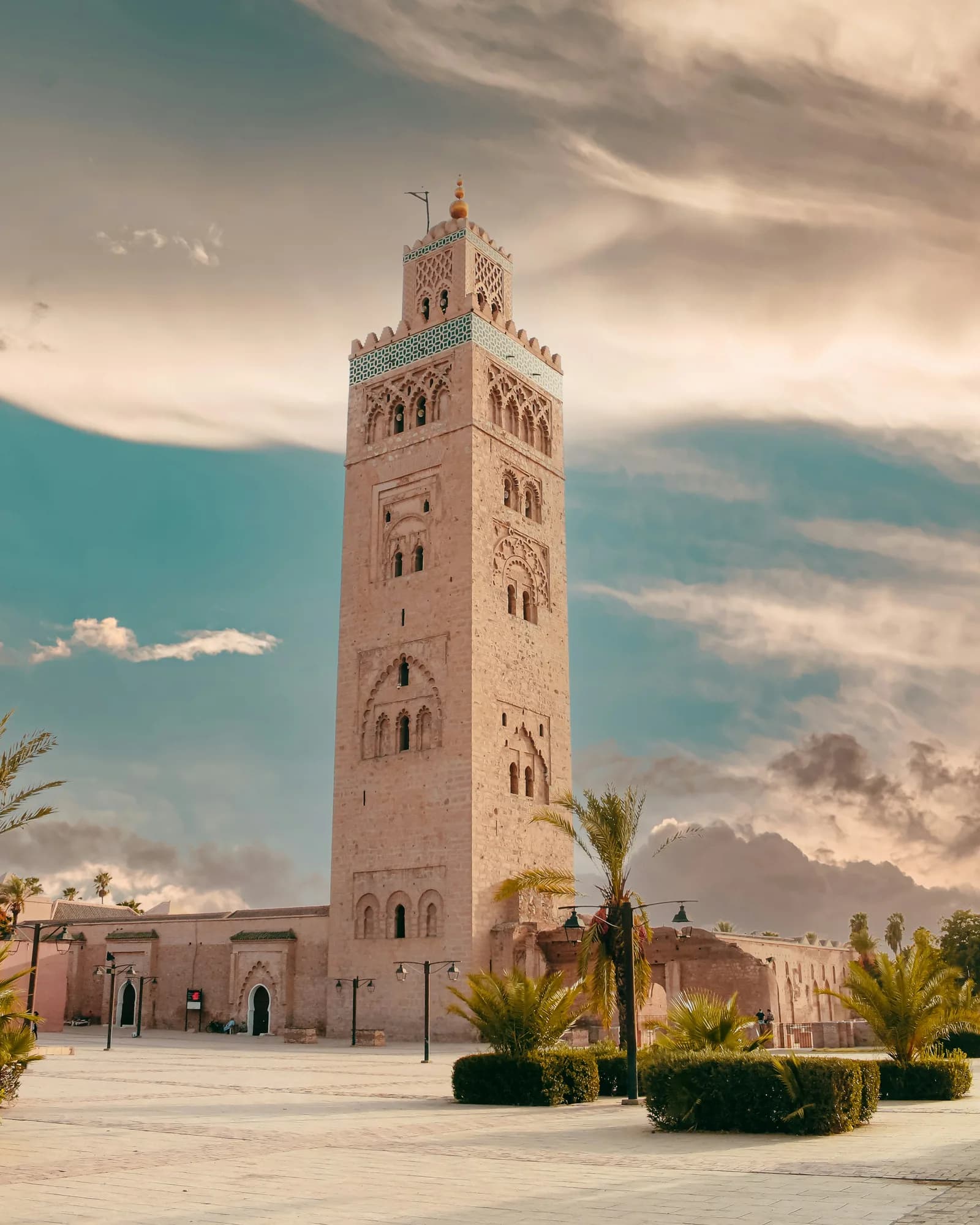
Marrakech is the long weekend the format was invented for: 3.5 hours from most of Northern Europe, zero jet lag, 18–22°C of dry winter sunshine — and a sensory total-immersion that makes three days feel like ten. Souks Friday evening, monuments and rooftops Saturday, the Atlas or Agafay on Sunday morning, home by midnight. Riad prices in winter are gentle, the heat that complicates summer visits is absent, and the cold nights (6–8°C) barely matter when you're asleep by then. No other sub-4-hour city moves you further from a northern January.
The city-sun tier: Andalusia and the Spanish coast
Málaga is mainland Europe's best winter weekend: 17–19°C days — the mildest on the continent — a 12-minute airport train, forty museums, the Alcazaba in low golden light, and long lunches that migrate down to the beach chiringuitos by noon. Alicante runs the same arithmetic with a castle and €12 menús. Valencia adds paella-at-source and the Ciencias architecture at 16–18°C. None of these are swimming trips (the Med sits at 14–15°C — the sea-temperature guide explains the winter floor); all of them are spring impersonations two and a half hours from the frost.
Valletta competes at 3 hours and 16–17°C: the most history per square metre in weekend range, harbour ferries, and the Caravaggio for a rainy hour — of which Malta has the Med's fewest.
The limit case: the Canaries and Cyprus
At 4–4.5 hours, the Canaries and Cyprus sit exactly on the long-weekend frontier: the warmest options in range (21–22°C and 17–19°C respectively) but the flight eats enough of day one and day four that we'd call them minimum four nights rather than true weekend trips. If you can stretch Thursday to Monday, they enter the conversation properly; for a strict three-nighter, the closer tier above delivers more sun-hours per annual-leave-hour.
The template
The format that works, tested across all of the above: fly out on the first morning flight, not the evening before's last one (winter evening departures are the delay-prone slots); carry-on only — a checked bag costs 40 minutes per direction, which is 5% of the entire trip; book the city-centre bed so zero ground time is spent commuting; and protect the Sunday-evening return with the earlier flight if Monday matters. Three days, properly arranged, reliably resets a winter. The how-to-build method covers the booking mechanics.