Alicante.
Spain's most underrated sun city: a castle over a palm-lined esplanade, a tram line to seven beach towns, an island marine reserve, and rice cooking that quietly outclasses paella. One of Europe's driest, sunniest corners.
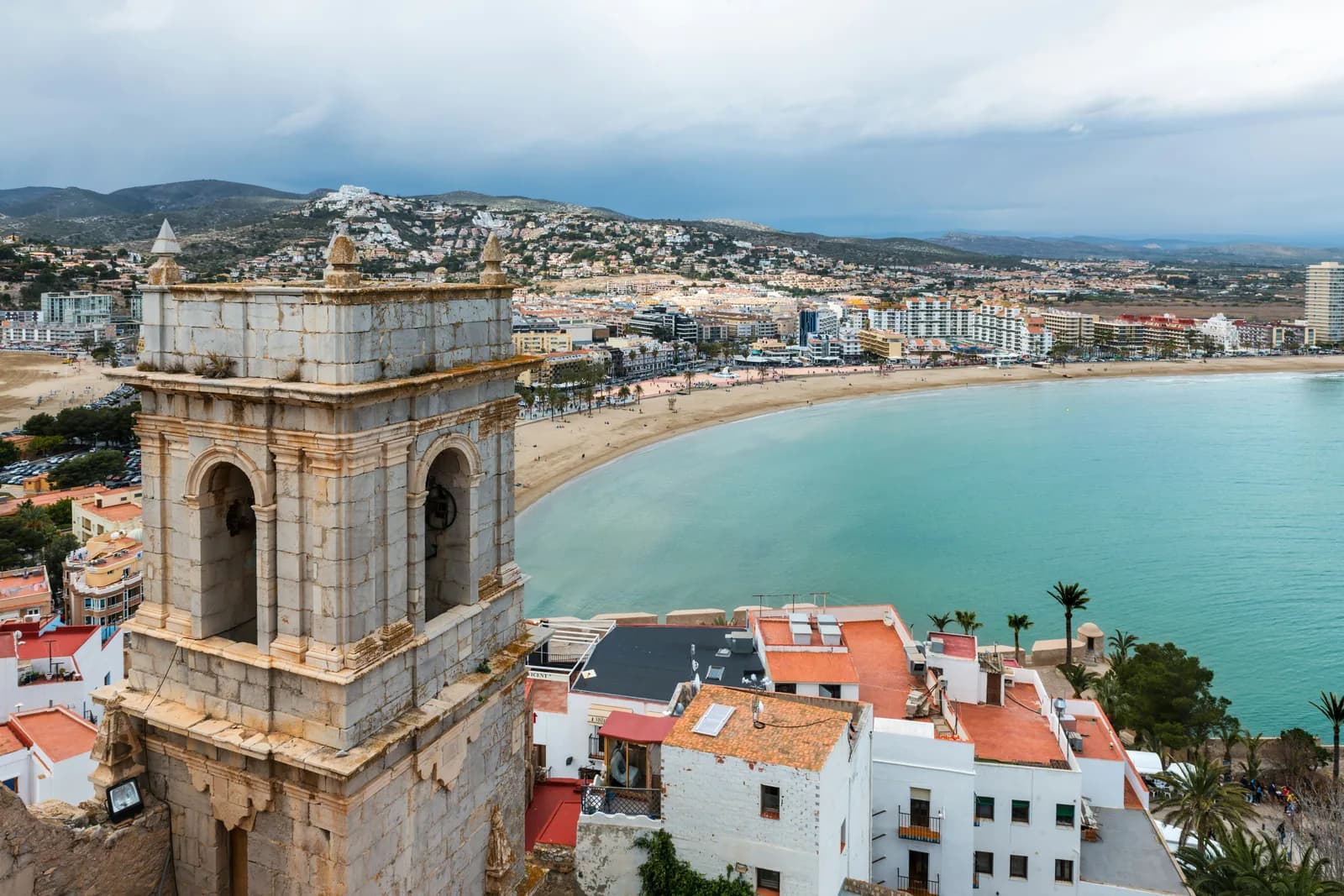
Alicante suffers from the same airport problem as Málaga once did: millions land at ALC and scatter to Benidorm and the Costa Blanca resorts without considering the city whose name is on their boarding pass. What they skip is one of Spain's easiest-living sun cities — a Moorish castle on a 166-metre rock, a marble esplanade under the palms, a old quarter painted blue and white up the hillside, seven kilometres of genuinely good urban beach one tram stop away, and a rice culture the Valencians respect and the tourists haven't found. It is also measurably one of the driest, sunniest corners of Europe: 300-plus sun days and barely 300 mm of rain a year.
And it's cheap — covered in our budget guide for exactly that reason. Same sea as the Balearics, two-thirds the bill.
When to go
The database gives Alicante an unusually wide window: May through October, July included. The semi-arid climate means summer runs hot-but-dry — 30–32°C in July–August, cooled most afternoons by sea breeze, without the humidity that makes other Mediterranean cities sticky. It's one of the few mainland Spanish cities our climate study doesn't flag in midsummer, though late-August heat spikes happen.
May–June: 25–28°C, sea 19–22°C, the city at its best. September–October: 26–28°C cooling to 24°C, sea at its 24–25°C peak — the swimmers' window. Winter (December–February) is the honest exception: mild 16–18°C days, but the sea at 14–15°C and the beach infrastructure asleep; a pleasant city stop, not a sun trip, which is why the database marks it avoid for our purposes.
Getting there
Alicante–Elche (ALC) is the low-cost workhorse of southeastern Spain — year-round routes from most of Northern Europe. The C-6 bus runs to the centre in 20 minutes for about €4; a taxi is €20–25. The city centre then works on foot, and the TRAM network handles the coast.
Where to stay
Stay between the Esplanada and the old quarter (El Barrio) — that's the evening-stroll, tapas-streets core, with Postiguet beach across the road. The Playa de San Juan zone, fifteen tram-minutes north, swaps city life for the big beach: a fine trade for families, a dull one otherwise.
Luxury — Hospes Amérigo
A 16th-century Dominican convent two streets from the cathedral, converted sharp: stone arcades, a rooftop plunge pool and bar staring straight at the lit-up castle. Around €180–240/night in season — Alicante's prices make "luxury" reasonable. Check rates on Booking →
Mid-range — Meliá Alicante
The big seafront slab between the marina and Postiguet beach — ask for a high sea-view floor and the location does the rest: beach in front, Esplanada behind. Around €130–170/night. Check rates on Booking →
Budget — Les Monges Palace Boutique
The old-quarter institution: a creaky, tiled, antique-stuffed guesthouse with rooftop terrace, run with affection. Around €70–95/night. Book early; everyone who's stayed once comes back. Check rates on Booking →
The castle and the barrio
The Castell de Santa Bàrbara is the city's anchor — one of Spain's largest medieval fortresses, draped over Mount Benacantil with the whole bay below. The honest route up: the lift bored through the rock from behind Postiguet beach (a few euros), then walk down through the ramparts and pine terraces into El Barrio, the old quarter, where the streets of Santa Cruz climb in blue-and-white steps hung with flowerpots. Time the descent for the golden hour and arrive at the tapas streets as they open.
Below, the Esplanada de España — six million marble tesserae in red, cream and black waves under four rows of palms — is the city's living room and the evening paseo route. Cross it for the marina; follow it east for the beach.
The rice truth
Alicante province is Spain's serious rice country — the Valencians invented paella, but alicantinos will tell you (correctly) that their drier, deeper-flavoured versions win. The canon to order:
- Arroz a banda — rice cooked in fish stock, the seafood served apart; richer than it reads.
- Arroz del senyoret — "the gentleman's rice": everything peeled and cut so the señorito never touches a shell.
- Caldero tabarquino — the Tabarca island fish-and-rice ritual, eaten where it was invented (below).
The institutions: Nou Manolín, whose bar — eating at the barra is the correct format — has fed everyone from Ferran Adrià down (€40–55 with the gambas rojas); Cervecería Sento, a closet-sized legend of grilled montaditos and theatre behind the bar (€15–20, stand and point); and the Mercado Central, a modernist hall where the morning shift earns its vermut by noon. Wash everything down the local way: ice-cold Horchata in summer, and turrón from Jijona — the almond nougat town is 30 minutes inland — in any season the excuse allows.
Tabarca
Spain's smallest inhabited island sits 40 minutes by catamaran from the marina (€20ish return, several daily in season): a walled 18th-century village built to house Genoese ex-captives, a car-free islet you can walk end to end in twenty minutes, and the surrounding marine reserve — Spain's first — with the clearest snorkelling water on this coast. Go on a weekday, swim the rocky east coves rather than fighting for the small main beach, eat a long caldero lunch, take the late boat back. In July–August book the boat a day ahead.
The tram coastline
Alicante's TRAM line L1 is a sun-holiday cheat code: a coastal light rail running north through El Campello (local beach town, fish auction), Villajoyosa (the chocolate town with the crayon-coloured fishermen's houses — Valor's factory and museum are here), and on toward Benidorm and Altea. Flat fares of a few euros, sea views from the window, a different beach every day without a car. Benidorm itself — the high-rise Manhattan of package tourism — is worth one ironic afternoon precisely because it's unlike anywhere else in Europe; Altea's white old town, two stops on, is its complete aesthetic opposite and the better dinner.
Practical notes
- Getting around: feet plus TRAM cover everything in this guide; no car needed.
- Sea honesty: Postiguet (city) is convenient and busy; San Juan is the proper 7 km strand — wide, golden, EU-blue-flagged, with a promenade of chiringuitos.
- The Hogueras caveat: around 20–24 June the city burns giant satirical effigies in its biggest fiesta — spectacular, loud, and hotels fill; book ahead or around it, by intention.
- Money: Euro. The €12–15 menú del día survives here better than in most coastal Spain — lunch is the value meal.
The summary
Fly ALC, base at the Amérigo or Les Monges in the old quarter. One day for the castle-and-barrio circuit ending in the tapas streets, one Tabarca day with the caldero lunch, one tram day (Villajoyosa chocolate, Altea evening), one San Juan beach day, every dinner within ten minutes' walk. May, June, September or October for the complete version; July works better here than almost anywhere else on the mainland. Alicante is what happens when a city has all the holiday ingredients and never bothered to charge for the assembly.