Summer beyond the beach: Europe's inland gems.
Eight European destinations where the summer vibe is excellent without the 40°C beach roulette: Italian lakes, Swiss villages, the Irish coast, Baden-Baden, the French Atlantic, and more.
"Sun destination" usually means "swim destination" — sea above 21°C, a beach, sunscreen. But a meaningful slice of what makes a European summer feel like summer happens away from the coast: a swim in a glacier-fed lake, an evening pre-dinner stroll in a 19th-century spa town, an Atlantic surf swell crashing against Basque headlands, a hike that ends at a hut serving rösti and beer. The eight destinations below are summer-vibes destinations that are decidedly not Mediterranean beach holidays, and most of them are now meteorologically more reliable than the Mediterranean in mid-summer.
Italian lakes
1. Lake Como
Pre-Alpine, 200m altitude, the lake itself stays swimmable June through September (22–24°C surface temperature). The villages — Bellagio, Varenna, Menaggio, Tremezzo — are operatic but functioning: the ferry network connects every harbour, the Tremezzo–Villa Carlotta walk is unmissable, and the food is northern-Italian-serious. Stay in Varenna over Bellagio if you want quiet; Bellagio is the lake's most photogenic village and pays the crowd price for it.
Como tempers heat — the southern tip stays 3–4°C cooler than Milan in heatwaves, and Bellagio further up is cooler still. Best months: late May, June, September. July–August are warm and busy but never hit Mediterranean heat-risk levels.
2. Lake Garda (the Trentino end)
The southern end of Garda (Sirmione, Desenzano) is a busy lakeside resort scene; the northern Trentino end (Riva del Garda, Torbole) is dramatically different — windsurfing capital of Europe thanks to the Ora wind that blows reliably 14:00–18:00 every summer afternoon, mountains drop straight to the water, and the Italian-Austrian cultural blend produces a quirky food scene (carne salada, stews in lake-fish stock). Best months: May–September.
3. Lake Lugano + Ticino
Swiss-Italian, somehow both at once. Lugano sits at 270m on the southern Swiss slope; the Mt San Salvatore funicular ride is one of the great half-day excursions in the Alps; and the food (cantonal Swiss with Italian flavours) is genuinely excellent. The Ticino river valleys north of Lugano are full of stone villages and chestnut groves where the chestnut is a serious cuisine ingredient. Best months: June through September.
Swiss and Austrian alpine resorts (summer)
4. Lucerne and the central Swiss lakes
Lucerne sits at 435m on a beautiful lake; from the city you can take a paddle-steamer to Vitznau, then the Rigi cogwheel railway to 1,800m for the canonical lake-and-Alps panorama. The Rütli meadow (where Switzerland was founded in 1291) is a quiet ferry stop. Best months: late June through August, when mountain trails are reliably snow-free and the lakes hit 19–21°C for swimming.
5. Hallstatt and the Salzkammergut
Austria's lake district. Hallstatt itself is the postcard — 700 residents, a salt mine that operated for 7,000 years, an Alpine lake that turns turquoise in summer — but the wider Salzkammergut has 76 lakes and far quieter ones. Bad Ischl for the Habsburg spa-town feel, Wolfgangsee for the swim-and-strudel combination. Trains from Salzburg run hourly. Best months: June through September.
6. Interlaken / Lauterbrunnen
The base for the Berner Oberland — Eiger, Mönch, Jungfrau. Lauterbrunnen valley has 72 waterfalls in a 7 km stretch (Rivendell was based on it). Schilthorn and Jungfraujoch are the high-altitude day excursions; Brienzersee is the lake side. Swiss prices are punishing but Swiss-punishing is different — you get what you pay for. Best months: late June through early September.
Atlantic coast: when the Mediterranean is too hot
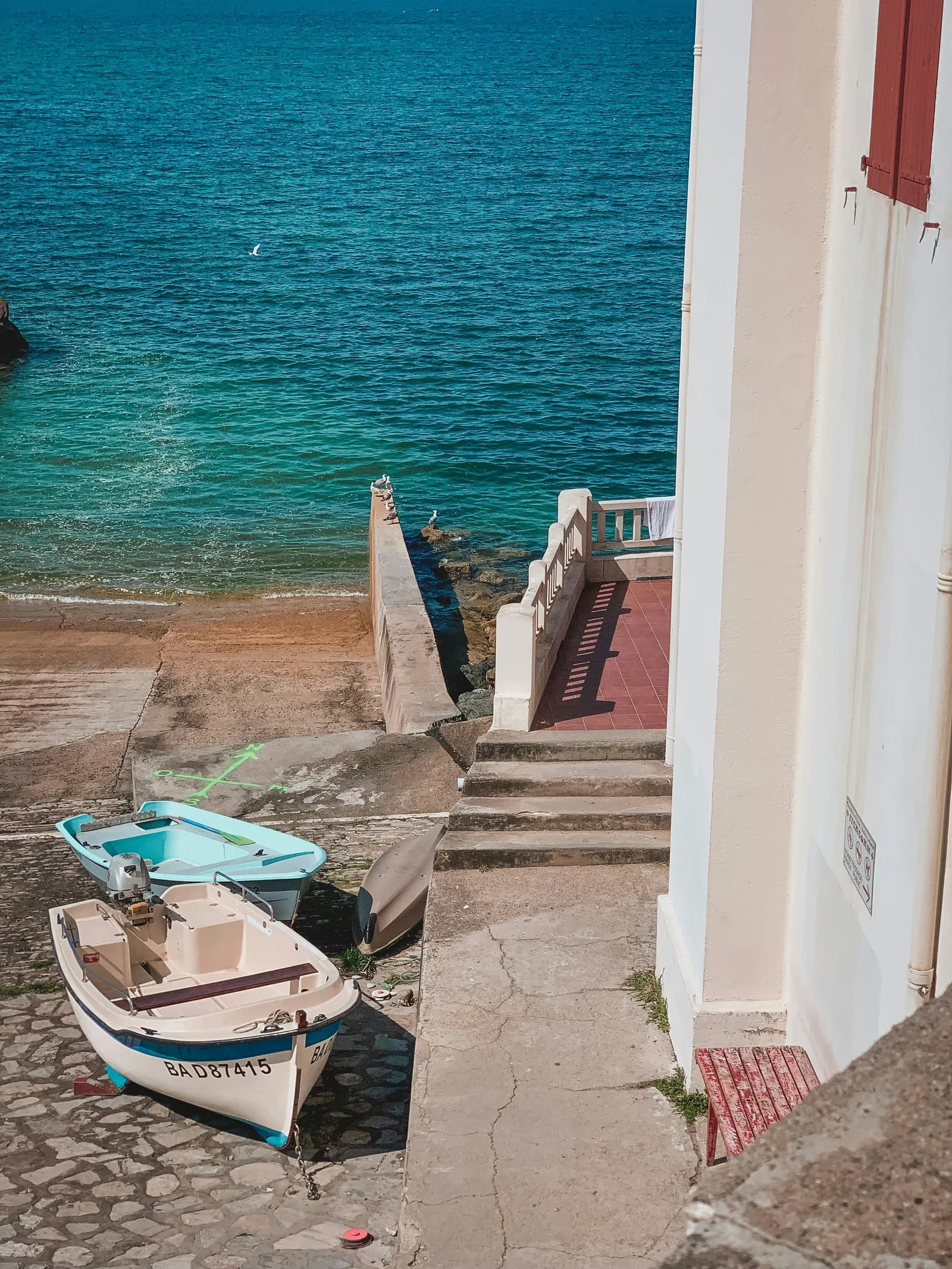
7. Biarritz and the French Basque Coast
Atlantic-tempered France. Biarritz has the surf, the gastronomy (one Michelin star per 5,000 residents), the belle-époque architecture; Saint-Jean-de-Luz is the calmer beach town 15 km south; San Sebastián is 30 minutes by road across the Spanish border. The Atlantic keeps temperatures at 24–27°C even in heatwave summers when Bordeaux and Toulouse are at 40°C. Sea climbs to 22°C by August. Best months: June through September.
8. San Sebastián / Donostia and the Basque Country
One of Europe's most under-priced gastronomic cities. La Concha bay is the urban beach Spain books out for August — crescent-shaped, calm, walkable end to end in 25 minutes. Pintxos in the old town: stand at the bar of three or four places (La Cuchara de San Telmo, Bar Borda Berri, Bar Atari are the Anglo-foodie circuit; Casa Vergara and Tamboril are the Basque-old-school ones), order one specialty per place, drink Txakoli white. Three Michelin-three-star restaurants within a 30-minute drive (Arzak, Akelarre, Mugaritz). Best months: June through September (sea reaches 22°C by August).
Spa-and-spa-towns
9. Baden-Baden and the German Black Forest
Belle-époque thermal town. The Friedrichsbad (1877, marble-and-fresco bathhouse, the classic 17-step Roman-Irish routine) and Caracalla Therme (modern thermal pools) are the two grand baths. Outside town: the Black Forest with cake, cuckoo clocks, and serious hiking at modest altitudes (700–1,500m). Best months: late May through September.
Irish coast (the other Atlantic refuge)
10. Killarney and Kerry
As close to a reliably cool summer as Europe gets. Killarney itself is the Irish small-town centre — the lakes of Killarney, the Gap of Dunloe horse-and-trap day, Skellig Michael by boat from Portmagee — but the actual draw is the Wild Atlantic Way running south to Dingle and Beara peninsulas. Air rarely exceeds 20°C; rainfall is constant but soft. Best months: June through August.
How to combine these with a real beach holiday
The cleanest two-destination summer trip combines an inland base with a coastal extension:
- Lake Como + a few days in the Italian Riviera (Cinque Terre, Portofino) — train from Milan to La Spezia
- Basque country + a sun-trip extension to the Algarve or Mallorca (low-cost carriers via Bilbao or Biarritz)
- Salzkammergut + Croatia coast (Salzburg–Zagreb train, then onward to Split)
- Killarney + a reliable-sun add-on in October (Faro, Tenerife)
The destinations index has the full coastal list grouped by region; this article complements rather than replaces it. For the deeper coolcation case — Norwegian fjords, Reykjavík, Cornwall — see the coolcation guide.