Palma.
A real Mediterranean city that happens to anchor an island of 200 beaches. The old town done properly, the 1912 wooden train through the mountains, the Caribbean impersonation at Es Trenc — and why August is the month to skip.
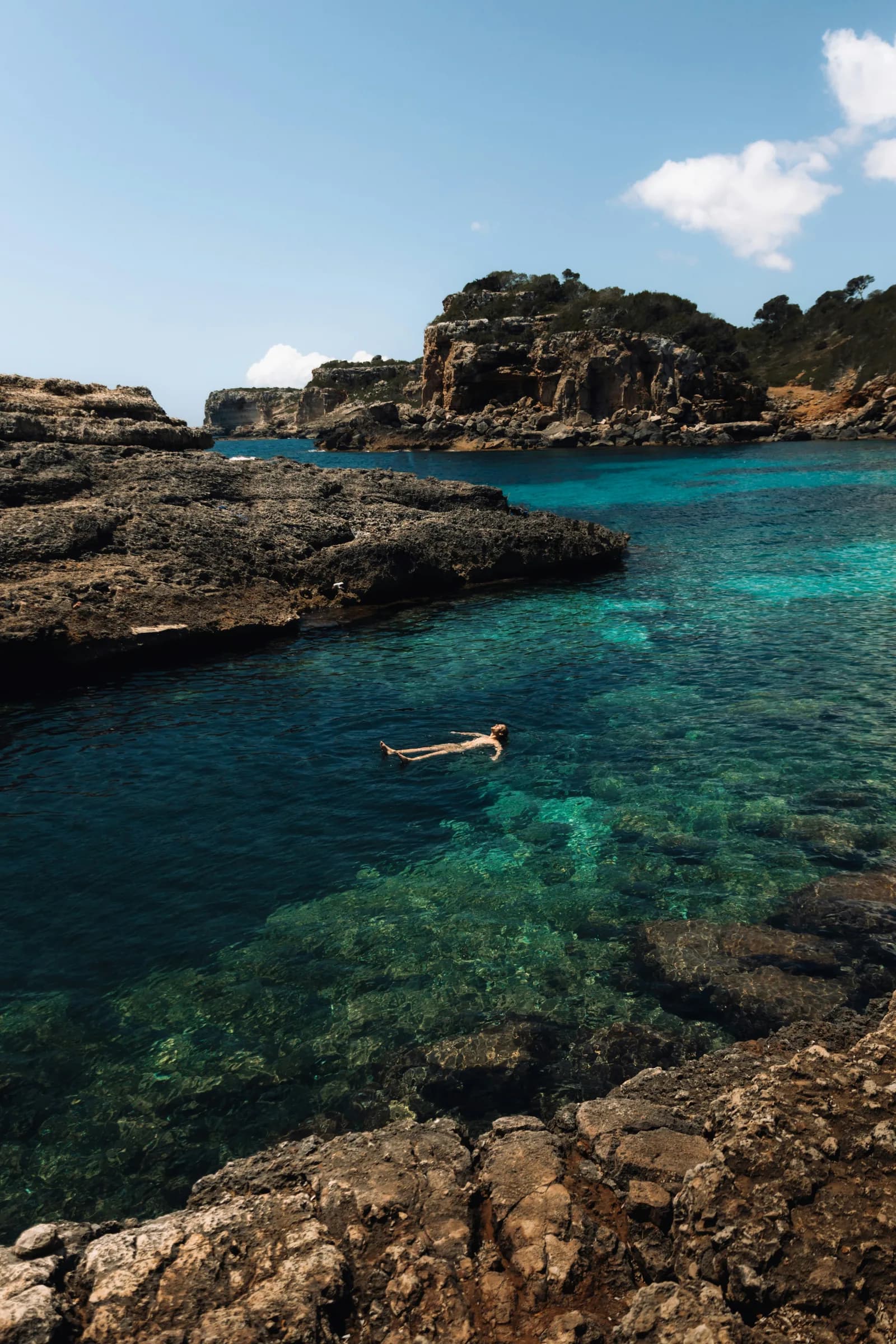
Palma has spent two decades quietly becoming one of the best city breaks in the Mediterranean while its own island's package-holiday reputation hid the fact. The old town is a dense sandstone labyrinth of courtyard palaces — over 60 of the famous patios survive — wrapped around La Seu, a Gothic cathedral so oversized for the town that it reads as a geological feature. In front of it: the bay. Behind it: the Tramuntana mountains, a UNESCO World Heritage cultural landscape. Within 45 minutes: beaches that get mistaken for the Caribbean in photographs.
The city-plus-island combination is the actual product. You base in a real city with real restaurants — Mallorcans outnumber tourists in the right neighbourhoods — and deploy outward.
When to go
May, June, September and October are the island's honest window, and the database agrees: 24–28°C, sea from 19°C (May) to its 25–26°C September peak, terraces full but functional.
August is the month to skip, said plainly. 31–33°C with humidity, the island at maximum occupancy, restaurant queues, rental cars sold out, and prices at their annual peak. July is August with ten per cent less of everything. If school holidays lock you to midsummer, Palma itself still works better than the resort bays — stone streets hold shade, and the city empties in August evenings as everyone moves to the water.
Winter is a sleeper: 15–17°C, half the hotels open, the cathedral and the patios to yourself, and the almond blossom from late January. Not a beach trip; a very good €60-a-night city trip. The professional cycling teams training on the mountain roads in February know something.
Getting there
PMI is 8 km east of the city — one of Europe's busiest holiday airports, which means flight prices stay competitive from everywhere. The A1 bus runs to the centre for about €5; a taxi is €18–25. If you're staying in Palma proper, you don't need a car except for the days you choose to need one — rent for 24–48 hours mid-trip rather than the whole week and skip the parking misery.
Where to stay
Stay in the old town (Casc Antic) for the full version: medieval streets, patios, the cathedral bells. Santa Catalina, the former fishermen's quarter west of the centre, trades history for the food scene — the market hall and the streets around it are the island's best eating density. The Paseo Marítimo hotels offer sea views and a 20-minute walk to everything; the package zones (Playa de Palma, Magaluf) are a different product entirely and not this guide's.
Luxury — Sant Francesc Hotel Singular
A 19th-century manor house on a quiet old-town square, converted with restraint: stone, oak, a rooftop plunge pool looking at the basilica next door. Around €350–450/night in season. The benchmark for Palma's now-crowded palace-hotel category. Check rates on Booking →
Mid-range — Hotel Cort
On Plaça de Cort by the town hall and the thousand-year-old olive tree, Mediterranean-crisp rooms above one of the city's better restaurants. Around €200–260/night in season. Location you cannot improve on. Check rates on Booking →
Budget — Brick Palma
A converted townhouse near the market end of the centre: compact rooms, decent beds, around €110–140/night in season — which on Mallorca's current curve counts as budget. The savings fund dinner in Santa Catalina. Check rates on Booking →
The Sóller day
The 1912 wooden train from Palma to Sóller is the island's best half-day logistics: an hour of mahogany carriages, orange groves and thirteen tunnels through the Tramuntana, then the rattling vintage tram down to Port de Sóller's horseshoe bay. Around €25 return for the train, tram extra. Go early (the 10:10 fills), swim at the port, eat an orange-everything lunch — Sóller's valley grew rich on citrus — and consider the bus back via Deià and Valldemossa to close the loop:
- Deià — the honey-stone village where Robert Graves wrote; walk down the ravine to Cala Deià and eat grilled fish on the rocks at the boat-shed restaurant the whole island books ahead.
- Valldemossa — Chopin and George Sand's monastery winter of 1838, told in every gift shop; buy the coca de patata bun, skip the third souvenir lap.
The beaches, ranked honestly
Palma's own city beach (Can Pere Antoni) is fine for a morning swim, no more. The real targets:
- Es Trenc — 2 km of white sand and shallow turquoise in the undeveloped south, the island's Caribbean impersonation. Park at Ses Covetes (paid, fills by 10:30 in summer) or come at 16:00 when the light goes gold and the crowd thins.
- Illetes — the closest proper cove chain, 20 minutes west by bus 4; pines, clear water, beach clubs.
- Cala Pi, Cala Mondragó, Caló des Moro — the postcard coves of the south and east. Caló des Moro is the Instagram one: 40 m of perfection holding 400 people by noon. Go at 08:00 or pick Mondragó's nature-park calm instead.
- Formentor — the wild north peninsula; in summer the access road closes to private cars at peak hours, so use the shuttle bus from Port de Pollença or the boat. Worth the logistics.
What to eat
Mallorca has its own pantry: ensaimada (the spiral lard pastry — buy from Horno Santo Cristo, baking since 1910, and carry the octagonal box home like the locals on every flight), sobrasada (spreadable paprika sausage, best on warm bread with honey), tumbet, frito mallorquín, and the market fish.
- Ca'n Joan de s'Aigo — since 1700, the hot-chocolate-and-almond-ice-cream institution. Go at merienda hour, stand the queue.
- Mercat de Santa Catalina — the eating market: oyster stalls, vermut counters, lunch menus around the edges.
- Casa Maruka — Mallorcan home cooking done seriously; the slow-cooked dishes the grandmothers stopped making at home. €30–40.
- Marc Fosh — the Michelin-starred tasting menu in a 17th-century convent, and by starred standards a bargain at lunch. Around €90.
Practical notes
- Getting around: TIB buses reach most of the island; trains run to Sóller (vintage) and Inca/Manacor (modern). The car is for cove-hunting days only.
- Crowds calendar: the island hosts 12 million-plus visitors a year, overwhelmingly June–September. May and October feel like a different, better island.
- Sea honesty: 19°C in May — brisk first swim; 25–26°C in September — the year's best.
- The German question: parts of the island (Playa de Palma, Port d'Andratx) run on German tourism; the old town and Santa Catalina don't. Pick accordingly.
The summary
Base in the old town or Santa Catalina, four to six nights. One Sóller train day with the Deià–Valldemossa loop, one rental-car cove day ending at Es Trenc for the late light, one full city day for the cathedral (morning sun through the rose window), the patios and the market. Eat the ensaimada standing up and the long lunch sitting down. May, June, September, October. Palma is what the Mediterranean city break looked like before the word "city break" cheapened it.