Ibiza.
Two islands share the name: the clubbing economy with its €80 doors and superstar DJs, and a pine-covered Balearic of hidden coves, hippy markets and the Mediterranean's best sunsets. Here's both, with the costs stated.
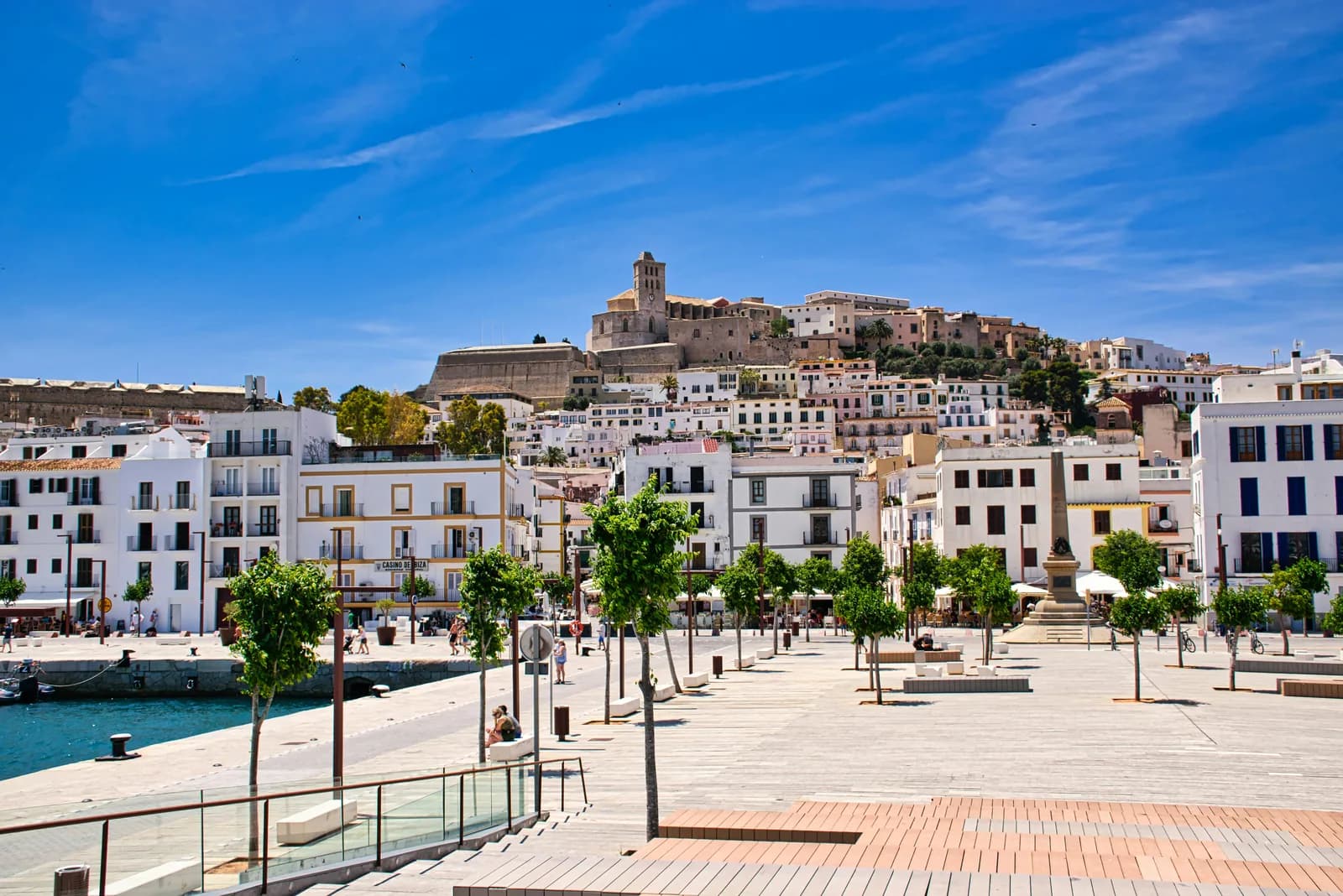
No island in the Mediterranean carries a stronger brand or a more incomplete one. Say Ibiza and the world hears superclubs — and the superclubs are real, the global pinnacle of the form. But the island they sit on is a UNESCO-listed Balearic beauty of pine forests, salt flats, fortified hilltop old town and some forty beaches, where the north still runs on farmers, hippies-turned-grandparents and dirt roads to empty coves. The two Ibizas coexist within twenty minutes' drive and barely acknowledge each other.
The honest guide covers both, because the trick to loving Ibiza is knowing exactly which one you're buying into, and what each costs.
When to go
May, June, September and October — the database and every Ibiza veteran agree. June is the opening-parties month: 26–28°C, sea at 22°C, the season's energy without its saturation. September is the connoisseur pick: the sea at its 25–26°C peak, closing parties, crowds visibly thinning week by week, prices descending. May and October bracket the season with 23–25°C days, an island returned to itself, and the caveat that some beach clubs and clubs are shut — a feature or a bug depending on your Ibiza.
August is flagged, hard: the island doubles its population, 31–33°C, every cala parked out by 11:00, and the year's highest prices on absolutely everything — the €20 beach-bed becomes €60, the hire car triples. July is August's slightly more reasonable sibling. If the clubs are the entire point, this is when the lineups peak and you simply pay the tariff; if they aren't, there is no argument for these weeks.
Getting there
Ibiza (IBZ) is 15 minutes from both Ibiza Town and Sant Antoni — direct seasonal flights saturate Europe from May to October, winter routes thin to Spanish hubs. Bus 10 covers the airport–town run for a few euros; taxis are metered and honest but queue badly at peak arrival hours.
The island is small — 40 minutes end to end — and the best of it hides down tracks no bus serves. Rent a car or you'll see ten per cent of the island; book it early for high season, when the fleet genuinely sells out.
Where to stay — pick your Ibiza
- Ibiza Town (Eivissa) — the capital: Dalt Vila's walls above, the marina's gin-palace yachts below, the best restaurants, Pacha up the road. Base here for the full mix.
- Sant Antoni — the package-and-party harbour. Its redeeming glory is the sunset strip and the bay; its weekday streets in August are exactly what you imagine. The hill above it, though, holds one of this guide's hotels.
- Santa Eulària — the calm family coast town with the best mid-range value.
- The north (Sant Joan, Portinatx, Benirràs) — rural agroturismos, the hippy residue, the quiet. The other Ibiza's home address.
Luxury — Mirador de Dalt Vila, Ibiza Town
A family-owned palace inside the UNESCO walls — eleven rooms of art and antiques, a tiny pool, the harbour panorama from the terrace. Around €380–480/night in season. The romantic-Ibiza pole position. Check rates on Booking →
Mid-range — Hostal La Torre, Sant Antoni outskirts
The cult sunset spot: a whitewashed clifftop hostal whose terrace — Balearic-beat soundtrack, sun dropping into the sea — became famous enough to fill its own compilation albums. Simple sea-view rooms around €150–200/night. Book months out. Check rates on Booking →
Budget-for-Ibiza — Hostal Parque, Ibiza Town
Clean rooms over the café terrace on Plaça del Parc, the old town's pleasantest square, with Dalt Vila's walls a minute away. Around €110–150/night in season — which on this island's curve is genuinely budget. Check rates on Booking →
The clubbing economics, stated plainly
The superclubs — Pacha, Amnesia, Ushuaïa, Hï, DC-10 — are the best in the world at what they do, and they price accordingly: entry €40–80 depending on night and name, drinks €15–25, water included in that bracket, taxis between venues on top. A two-club night for two people lands €300–400 without trying. Nobody should discover this at the door.
The judo moves: opening and closing weeks (late May–June, late September–October) run the same rooms at softer prices; DC-10's Monday institution and the free-entry sunset bars deliver the music culture without the door; and the San An sunset strip plus Hostal La Torre cost one drink. If clubs aren't your Ibiza at all, skip August, head north, and the island never mentions them again.
The coves, ranked honestly
- Cala Comte — the west-coast benchmark: turquoise channels between islets, sunset alignment, and crowds that arrive on schedule. Go before 10:30 or at 18:00.
- Cala Bassa — white sand, pine shade, family-easy; same timing rules.
- Cala d'Hort — the view of Es Vedrà, the 400-metre rock pyramid offshore that collects the island's myths (Homer's sirens, magnetic anomalies, none verifiable, all enjoyable). Lunch at the paella houses above the sand.
- Benirràs — the north's drum-circle bay: hippy Ibiza's Sunday sunset ritual, bongos included, somehow still genuine.
- Cala Xarraca and the north pockets — the quiet ones, even in August. Snorkel territory.
- Ses Salines — the flat south: beach clubs on the sand, flamingos in the salt pans behind, the scene's daytime HQ.
Formentera, the obligatory day
The little sister is 30 minutes by ferry from Ibiza Town (around €25–30 return, constant departures) and looks Photoshopped: Ses Illetes runs Caribbean-white into water that out-blues the Maldives in photographs taken on phones. Rent a bike or scooter at the port in La Savina, do Illetes plus the Es Pujols–Migjorn loop, eat grilled fish at a beach kiosko, last boat back. In August the trick is the 09:00 ferry out, 19:00 back — midday Illetes is as busy as anything on the mainland.
Eating, beyond the beach clubs
The island dish is bullit de peix — saffron fish stew whose broth then cooks a second course of rice (arroz a banda) — and its spiritual home is Es Torrent, the beach restaurant in a cove south of Sant Josep (book, bring a yacht-adjacent budget, worth it once). The countercanon: Bar Costa in Santa Gertrudis for jamón-hung ceilings and the island's definitive bocadillo; La Paloma near Sant Llorenç, a lemon-garden kitchen of Italian-Ibizan slow food; Es Boldadó above Cala d'Hort for paella with the Es Vedrà view; and the hippy markets — Las Dalias (Saturdays) and Punta Arabí (Wednesdays) — where the food stalls outclass the tie-dye.
Practical notes
- Car logistics: the cove tracks are dusty but fine for a small hire car; parking at famous calas fills by 10:30 in season.
- Sea honesty: 22°C in June, 25–26°C in September — the swimming is the Balearics' best feature and Ibiza's water clarity is genuinely exceptional.
- The UNESCO bit: Dalt Vila's listing includes the Posidonia seagrass meadows between Ibiza and Formentera — the reason that water is that colour. The fields are protected; anchoring boats over them is the island's perennial scandal.
- Money: Euro. Cash for the kioskos and markets; cards everywhere else.
The summary
Rent the car at IBZ, base at Hostal Parque or the Mirador if it's that kind of trip. One west-coast day (Comte early, Bassa after, La Torre sunset), one north day (Benirràs, Xarraca, Las Dalias if Saturday), one Formentera ferry day on the early boat, one Dalt Vila evening ending in the old-town squares — and the club nights budgeted honestly at €150–200 a head if that's your Ibiza, or skipped without loss if it isn't. June or September. Both islands in the name are real; now you've met them both.