Bali.
The island that flips the calendar — its dry season is the European summer. Which Bali is yours (Canggu, Ubud, Uluwatu, Sidemen), the temple queues stated honestly, and the ceremonies that are the actual point.
Bali runs on a different calendar from everything else on this site, and that single fact reorganises the whole decision: the island's dry season is May to September — the European summer — making it the rare long-haul that competes head-on with the Mediterranean's peak months rather than with the winter-sun map. While Greece bakes past 35°C, Bali's dry season holds a breezy 29–31°C with cool nights and reliably blue boat days.
The second reorganising fact: there is no single Bali. A small volcanic island holds a surf-and-laptop coast, a jungle-and-rice spiritual interior, a clifftop temple south, and an unhurried east that tourism keeps forgetting — connected by traffic that has become the island's honest tax. Pick your Bali deliberately, accept the tax, and the place still delivers what the postcards have promised since the 1930s: beauty with a belief system attached.
When to go — the inverted calendar
May through September is the database's window and the island's dry monsoon: 29–31°C, humidity dialled down, the surf and boat schedule dependable. July–August add peak crowds (and peak Canggu gridlock) without breaking the weather. April and October shoulder acceptably.
December through March is the avoid list — the wet monsoon: not constant rain but daily tropical dumps, mould-grade humidity, brown river-mouth surf and the slowest traffic of the year. The honest note for January-sun shoppers: this is exactly the European winter, which is why Bali never appears in our winter guides — Thailand owns that slot.
One date to respect: Nyepi, the Balinese new year (March, lunar), the day of silence — the entire island stops, the airport closes for 24 hours, nobody (tourists included) leaves their accommodation. Plan around it, or treat being on-island for it as the quiet privilege locals consider it.
Getting there and getting around
Denpasar (DPS) connects through the Gulf and Asian hubs from Europe (16–20 hours door to door). On arrival: pre-book hotel pickup or use the official taxi counter; in daily life, Grab and Gojek (the ride apps, cars and scooter-taxis both) are cheap and frictionless where local cartels haven't posted "no Gojek" zones — your driver will know.
The scooter question gets its own guide and its rules are not optional: IDP, helmet, insurance honesty, and the acceptance that Bali traffic is a contact sport. For day-tripping, a car with driver (€40–55 for a 10-hour day) is the island's best logistics product — doubles as guide, solves parking, survives the traffic for you.
Which Bali is yours
- Canggu — the laptop-and-longboard sprawl: surf at every level, third-wave coffee, gyms, co-working, nightlife — and the island's worst traffic per metre. Energising or exhausting; know thyself.
- Seminyak — Canggu's polished elder: beach clubs, boutiques, restaurants with wine lists. The resort default.
- Uluwatu / the Bukit — the southern clifftops: Bali's best beaches (Padang Padang, Bingin, Melasti) below limestone walls, world-tour surf, sunset cliff bars. The beach-first base.
- Sanur — the calm east-facing original: paved beach path, gentle lagoon, families and returning regulars.
- Ubud — the interior capital of rice, yoga and ceremony: jungle valleys, the artisan villages, the food scene. No beach, no regrets.
- Sidemen — Ubud twenty years ago: rice terraces under Mount Agung, guesthouses among the paddies, the east's slow heart.
- Amed / Tulamben — the dive coast: black sand, the USS Liberty wreck snorkelable from shore.
- Kuta — the package-era relic; pass through, don't stay.
Where to stay
Luxury — COMO Uma Ubud
Pavilions and pools stepped into the Tjampuhan valley jungle: the serene end of Ubud's spectrum, with the COMO kitchen and spa doing their quiet best work. Around €280–380/night. Check rates on Booking →
Mid-range — Alaya Resort Ubud
Rice-field views from the pool, Ubud's centre at walking distance, design that photographs above its rate. Around €110–150/night. Check rates on Booking →
Budget — Puri Garden Hotel, Ubud
The sociable garden base: pool, breakfast, dorms and private rooms around €35–60 — Bali's price floor remains one of travel's miracles. Check rates on Booking →
(The pattern repeats per coast — the Bukit and Canggu run the same three tiers; pick the base first, the bed second.)
The temples, stated honestly
- Uluwatu — the clifftop temple at golden hour with the kecak fire dance chanted by a hundred men as the sun drops behind the stage: touristy, magnificent, worth every rupiah (€8–10 entry + dance ticket; macaques here are professional sunglasses thieves — pocket everything).
- Tanah Lot — the sea-temple silhouette: arrive 16:30 for the photo, accept the crowd as part of the composition.
- Lempuyang's "Gates of Heaven" — the honest paragraph: the famous mirror-floor photo is a puddle-reflection trick administered by a photographer with a queue that runs two to four hours for thirty seconds of frame. The temple itself is real and the view of Agung sublime; go for that at 07:00, or skip the queue without guilt.
- Tirta Empul — the spring-water purification temple where visitors may respectfully join the bathing ritual (sarong provided, separate queue, follow the locals' sequence).
- Besakih — the mother temple on Agung's slopes: vast, sacred, best with a guide who can read it for you.
The deeper truth: the island's religion isn't in the ticketed temples but ambient — the canang sari flower offerings underfoot each morning (step around, never over), processions that close roads without apology, a ceremony calendar that outranks commerce. The traffic jam behind a temple procession is Bali working correctly.
The interior — rice, ridges, waterfalls
Tegallalang's terraces are Instagram's choice (go 07:00, expect swings and queues); Jatiluwih's UNESCO amphitheatre an hour north is the grown-up version — vast, walkable, quiet. The Campuhan Ridge walk handles Ubud's golden hour for free. Waterfall ambitions scale from the show-caves of the Gianyar belt to Sekumpul in the north — the island's grandest, ninety minutes of winding road and a steep wet staircase that filters the crowd. Munduk's cool hill country strings several falls into one walking day.
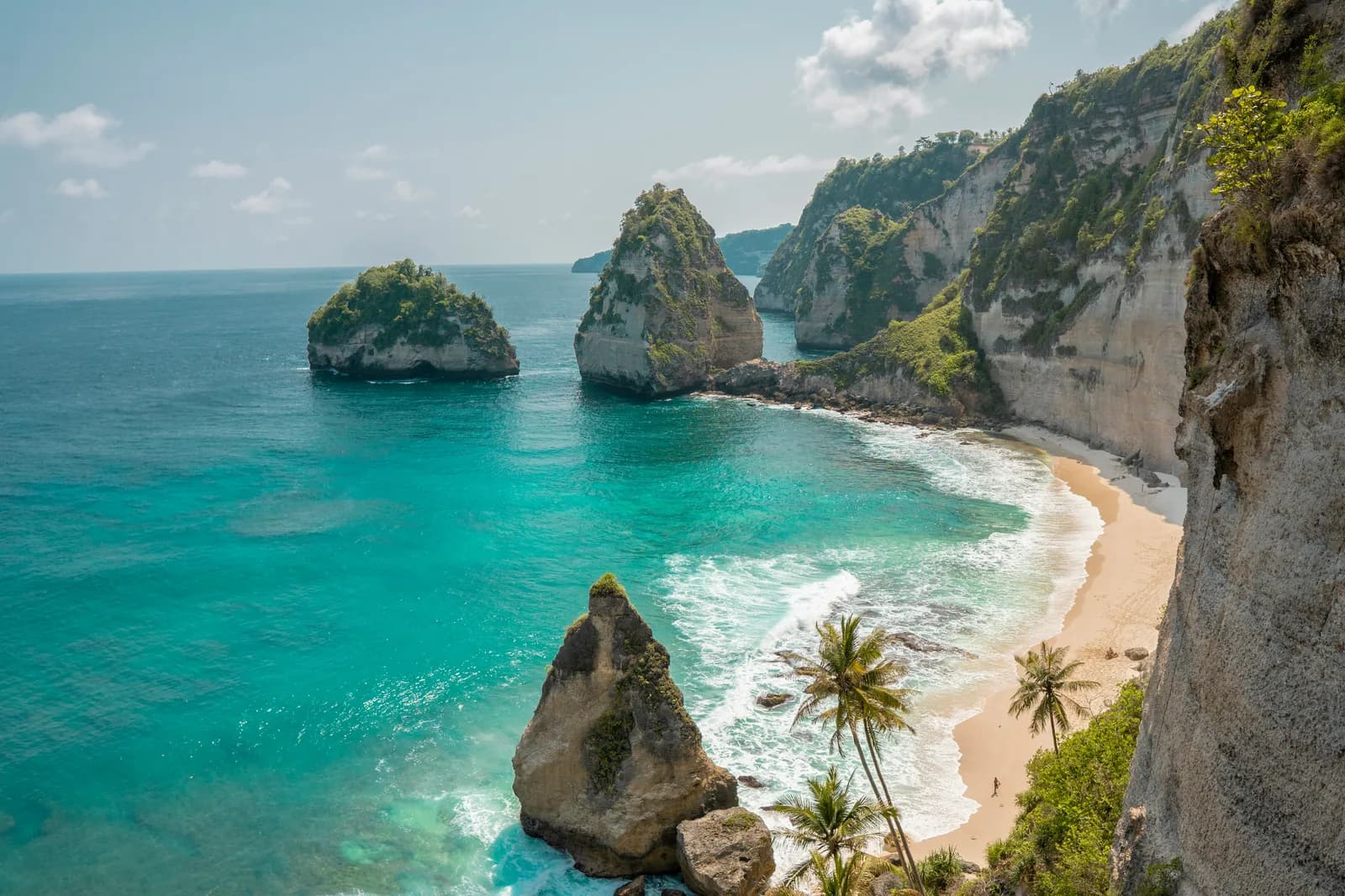
Nusa Penida, the limestone sister island (45-minute fast boat — day tours bundle the crossing and the island's punishing roads), owns the island's most dramatic coastline — Kelingking's T-rex headland above an impossible beach — and the honest notes: the viewpoint crowds are real, the cliff stairs are genuinely hazardous, and the island's roads are an adventure sport. Day-trip for the views; overnight if you want them at dawn.
Eating — warung first
The €3 nasi campur at a family warung remains the island's defining meal: rice, the day's dishes pointed at, sambal calibrated to your courage. Babi guling (ceremonial spit-roast pig) is the celebration dish — Ubud's famous Ibu Oka serves the tourist liturgy; any village warung with a Saturday queue serves the local one. Bebek betutu (slow spiced duck) rewards the half-day's notice it traditionally requires. Up the scale: Ubud's restaurant row runs to genuine fine dining (the Locavore team's tasting menus book out weeks ahead), and every coast has its sunset-grill economy — Jimbaran's beach seafood being the institutional version (pick stalls weighing openly).
Two cautions earned by repetition: ice in established places is factory-made and fine, tap water is not; and arak cocktails belong only in venues you trust — bootleg arak is the island's one genuinely dangerous bargain.
Practical notes
- Visa: visa-on-arrival for most (extendable 30+30 days); the tourist levy applies — both fully digital now, queue accordingly.
- Money: rupiah in fat denominations; cards in the bubble economy, cash in warungs; ATMs skim-prone — use bank-attached machines.
- Conduct: sarongs at temples (lent at gates), no drones over ceremonies, left hand gives nothing.
- Sea honesty: dry-season water is 27–28°C; currents on the Bukit and west coast are real surf currents — flags and lifeguards exist mainly at the famous beaches.
- Traffic maths: Canggu→Ubud can run 90 minutes for 25 km. Plan days by region, not by map distance.
The summary
Fly DPS for the May–September window, split the stay by personality: Ubud or Sidemen for the interior (Alaya or COMO Uma), the Bukit or Canggu for the coast. One temple-day built around Uluwatu's kecak sunset, one interior day (Jatiluwih, Tirta Empul, a waterfall with stairs), one Penida boat day for the cliffs, surf or dive mornings by coast, warung lunches as policy, and the ceremonies taken as they come — they're the island's main event wearing the costume of an interruption. Bali in its dry season is the European summer's strongest long-haul argument; the traffic is the price, the offerings underfoot are the receipt.